I met Dana Stirling, and her partner Yoav Friedländer, at a photo festival in Portland, back in 2019.
(The before-times.)
They’re both photographers, born in Israel, and together they also run Float Magazine.
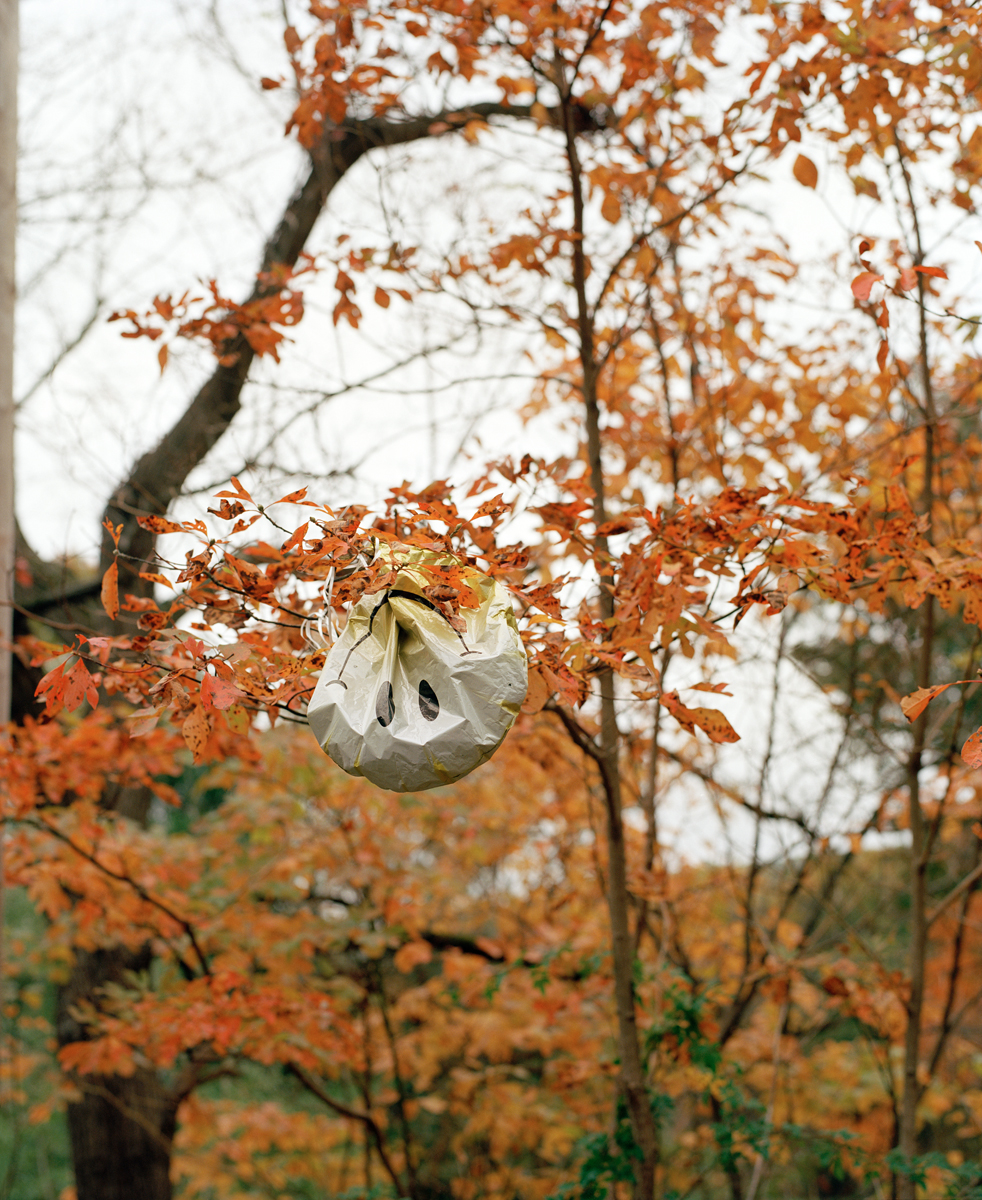
Dana recently shared her project, “Why am I Sad?” with me.
Not only did I love it, but found the concept, (using art both to understand, and express our own mental state,) to be in line with what Sunshine and Olly has become.
I’m excited to kick off a new feature here on the blog, with an edit of Dana’s phenomenal work, as well as an interview we conducted via email. (This was not a pre-written Q&A; rather, we answered each other in real time.)

Jonathan Blaustein: I know you’re from Israel, but not what brought you to the States.
What was behind your big move?
Dana Stirling: Originally my partner, Yoav, moved to New York in 2012 to study for his MFA at the School of Visual Arts. I was still in my undergrad program at the time, so we were long distance for a year. Once I finished my BA in 2013, I visited many times to be with him and decided to apply for an MFA program as well. I was rejected from almost all of them and ended up also doing my MFA at the School of Visual Arts which is when I moved as well.
JB: Gotcha. So it was for school. Makes sense.
If you’ve been in the US for a decade, (much less the last decade,) you haven’t necessarily seen us at our best.
Why did you stay?
DS: I think every place has its ups and downs, no? It is easy to see how much greener someone else’s grass is so I try not to judge anything or anyone too harshly.
I grew up with immigrant parents who came to Israel from London back in ’88 for many reasons, but including anti-semitism. I grew up speaking English, and my parents struggled with the local language (Hebrew,) but because I was born there I was basically a Tzabar (meaning a person who was born in Israel).
Even though I was native to this place, I always felt pretty disconnected. I was never really British enough but never really Israeli enough too in my mind – I just felt like I belonged nowhere.
There was never a strong connection to my physical space. I never felt a rooted connection to the land, and always felt like an immigrant, so moving to another country like the U.S was just natural to me – I belong nowhere so what does it matter where I am?


JB: I didn’t know your family had immigrated to Israel from England.
I was curious, and your answer is powerful, but also lines up.
In particular, because the series we’re featuring here, “Why Am I Sad?” speaks powerfully to a sense of disconnection, or dislocation. And you write (eloquently) in your statement about your mother’s clinical depression, which can feel like a wall that exists in a relationship.
The images speak to a mental state, but also to using art in the hope of escaping that mental state.
What is it like for you to be open and vulnerable with others, through your creative process?
DS: Thank you for the kind response to my words – I always say that English is actually not my first language even though I’ve talked to my parents in English only all my life, but Hebrew has always been my first language, so writing in English can be a struggle sometimes.
I actually always felt a deep shame with my situation.
No one really knew about it growing up, besides maybe a couple of friends. I always talked about it in a very shallow way, which led to most of my personal relationships in my young life to be pretty superficial, because I never really wanted to talk about my home or my mother or more importantly – how I felt.
It took me a long time not only to talk about it in this way, but actually understand the impact it has on me, and how it shaped who I am and how I act and feel as an adult.
I have a fear of becoming sad and depressed to the point of not leaving the the house, like my mother, that is so rooted in me that every time I am home not doing something productive I hear these voices in my ear. But at the same time, I’ve always struggled with motivation, and being productive, because it was just always easier to hide, sleep, ignore and isolate rather then do anything active. So this is something I still struggle with.
Photography has really saved me, because it gave me purpose. I think if I hadn’t found it – I might have been completely lost.
Funny enough this project is really all about this struggle.
Photography is a way for me to communicate, because I do have a tendency to hide and bottle my emotions up – but it is also a source of frustration because when I don’t photograph, I feel anxious about not doing enough and feeling like I am failing which becomes an interesting cycle of emotions but it also what makes me photograph the way I do – complex I know.

JB: I can relate to pretty much everything you’ve written.
I think a lot of other people can too.
I respond to your writing, yes, and find it fascinating that you can’t/don’t communicate with your parents in your mother tongue.
Such a powerful metaphor.
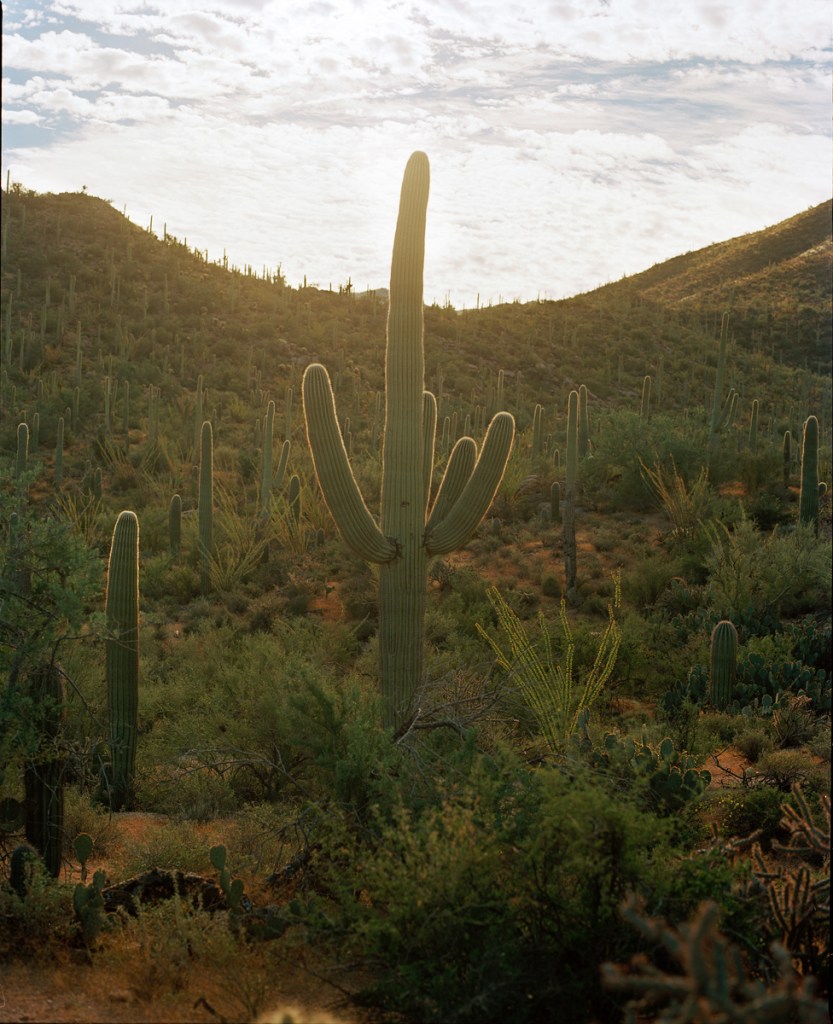
The images (at least the ones you share,) do capture an intense emotional energy, which comes from your vision, but also the color and light palette. Though you share in your statement that you made object art in rooms for years, as a form of comfort, I actually love the pictures shot out in the world.
The super-bleak swimming pool in Winter is a great, and obvious one. But there were a lot of photos that include lush greenery, or flowers. As if you were seeking to find some solace, even as you were also attracted to sad things.
That said, I also found a bit of absurdist humor embedded in there too.
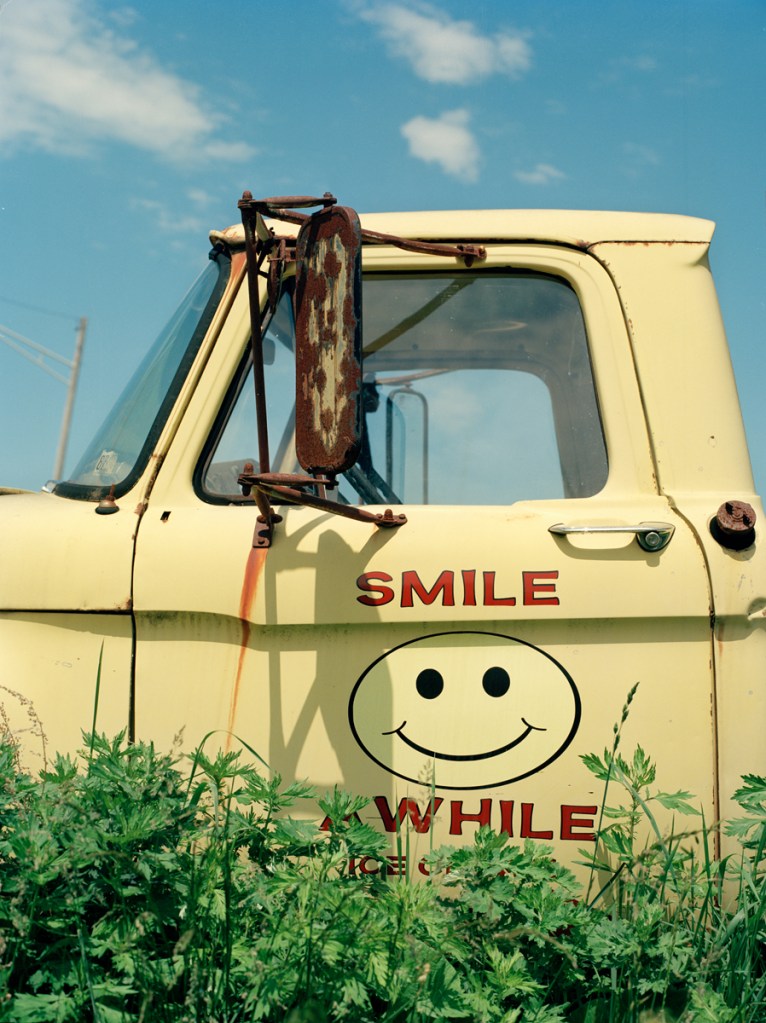
It’s known, from a feminist perspective, that men often tell women to smile more.
And your series features an image telling people to smile, as well as smiley-face-emoji graphics.
In a way, is that subtext here?
“Don’t tell me to smile, asshole! You don’t know me, or why I’m not smiling.”
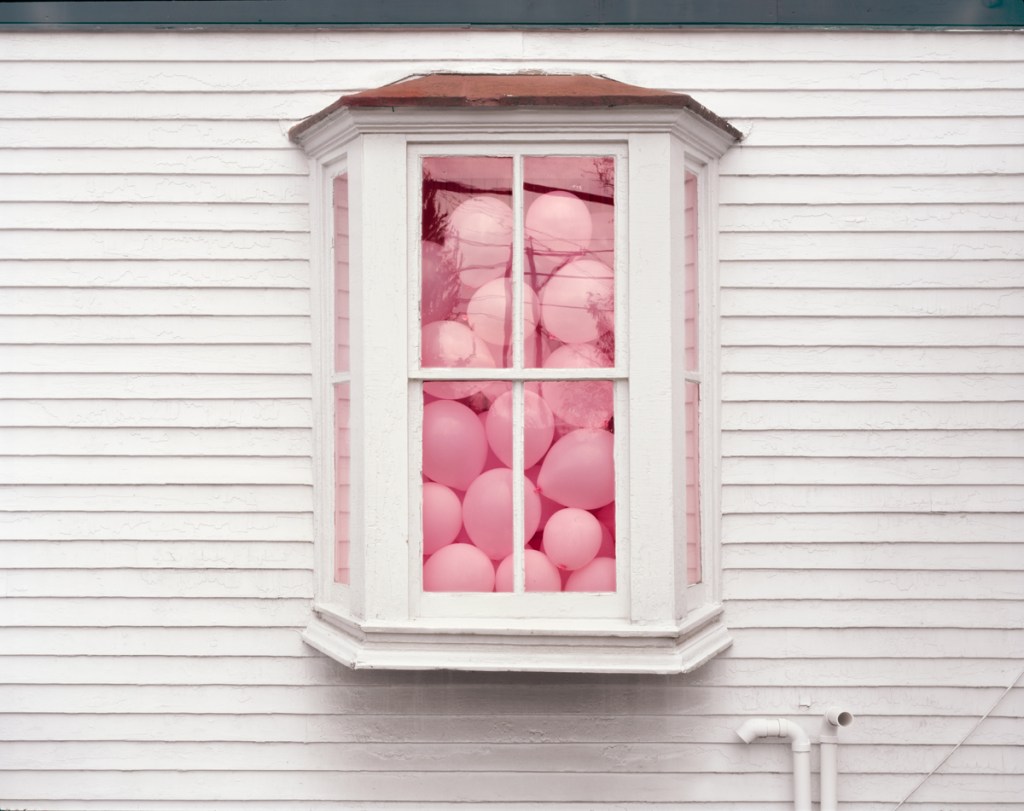
DS: I think in a way my work is sad mainly because – I am sad (sometimes). What I mean is that, I photograph thought that mindset.
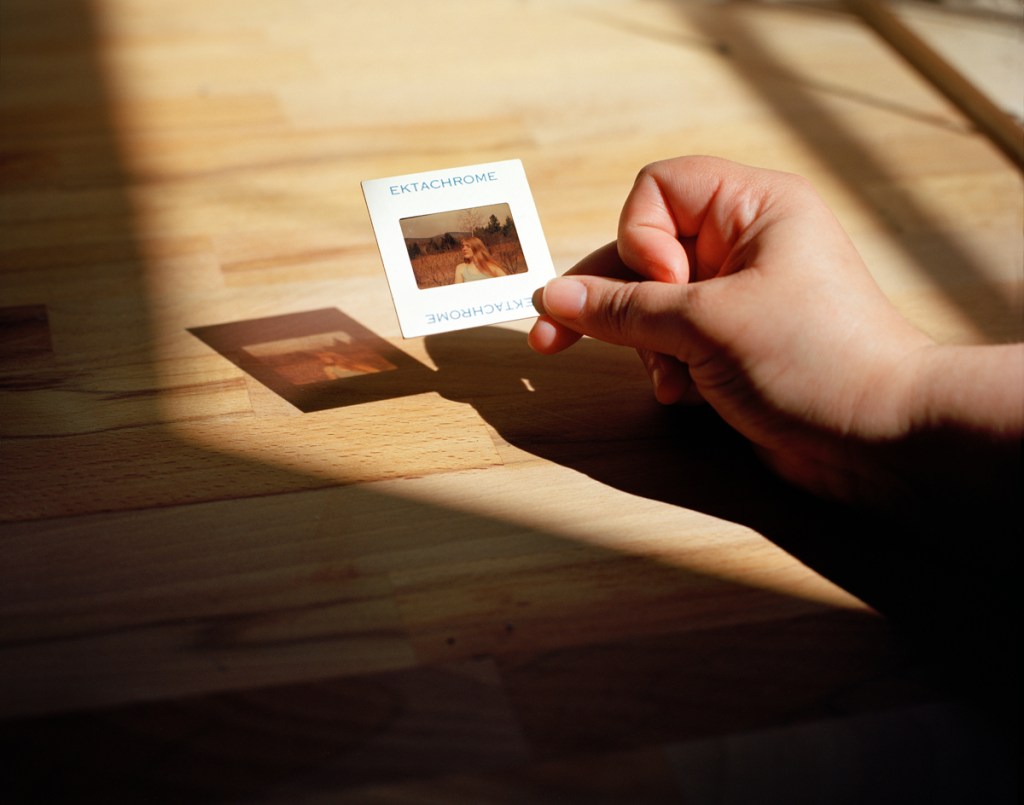
I am actually a really picky photographer. I use a Mamyia RZ 67 film camera, and I won’t even take it out of the bag if I don’t see something that I think is interesting or makes sense. I can go an entire trip without even photographing a single image.
I can only photograph something that is perfect for what I am looking for, so my work process is pretty slow. When I do find these gems, they are unmistakably a perfect representation of who I am as a person and as an artist.
This is also why photography is such a source of worry for me as well, as I mention in my statement, because I am so picky I won’t photograph for a long period of time which makes me spiral.
I think my work has always been slightly sad, even when I document things that are “happy” like the smiley face because it is just a reflection of myself.
I do like the irony and the humor that comes out of these images as well. It is definitely intentional, and is indeed a part of the work.
I think life is complex, and emotions are not always black and white. I do struggle with depression but I also have a really good life – I love, I enjoy things, I am also happy in addition to having this heavier burden.
This work, I think, reflects all of this. I think there is beauty in sadness and I personally always found my images to be beautiful regardless of what is photographed in it – even if it is something that is decaying, dying or discarded.
I’ve had many people in the past tell me that my work is too sad and it will never sell and that people will not be interested in it – it stopped me for a while and it really made me question my images, but eventually I realized that my work will always be this way because this is who I am and I can only photograph through the lens of the person I am.
I hope people who see the images smile, but I also hope they will come to understand that it is okay not to smile if they don’t want to, and not be okay all the time and that other people struggle just like them and that is okay too.
JB: OK. Fair enough.
A diplomatic, but honest answer. (You’ll get no ball-busting from me on the subject.)
You’ve been really generous to share your work with our audience, as well as taking the time to answer my questions.
I’ve got just one more, if you don’t mind.
Have you got anything cool coming up, in the near future, that you’d like to be able to share with us? Either in your photographic practice, with Float Magazine, or maybe something Yoav is working on?
Thank you so much for everything!


DS: It’s been a pleasure and thank you for your genuine interest in the work.
I truly do appreciate it!
I am working towards getting this project into a book, but I can’t really say more than that for now. Hopefully things will work out soon, and we can see this work on the pages of a printed book, which has always been my dream.
With Float I am always looking to make more opportunities for artists to showcase their work in the best way possible with, as little to no cost, which is always a challenge but it is a huge passion of mine.
Because I am an artist myself, I’ve seen the increase in prices for calls for entry, and it is honestly getting unattainable to submit your work to many people. It’s getting closer every day to a system of “pay to play,” in order to get yourself out there.
Now I do understand platforms need money, and I am not necessarily against a submission fee, but the prices are getting to be so high that many artists don’t feel they can justify spending these prices only to get rejected.
I want to make opportunities that are accessible, as much as possible, if I can.
 Sunshine and Olly
Leave a comment