
I never planned to take a year off from writing about photography.
When it comes to the Creativity Gods, though, I try to listen to what they say, and stay as open as possible.
The time away did me well, (and I wrote about other things,) but now it’s time to share cool photography again.
As I said last week, Scott McDermott’s PR email about his celebrity chef photos was enough to push me from considering doing this, to actually doing it.
Luckily, not long after I arranged Scott’s piece, a new, intriguing email popped up.
Danny Duarte, a young Guatemalan-American photographer from Greater LA, reached out with a PR email of his own.
So I clicked.
I’ve always been a sucker for pictures that show us piercing vision of a place in time, and Danny’s not just from LA, he’s from The Valley; a place famous in its own right, but most people don’t know why.
(Beyond Cobra Kai.)
Danny’s series, (which we’re featuring below, along with his interview,) was made in Reseda his home town.
I love his pride, and the vibrancy of his photographs.
The piercing California light.
I’m sure you’ll dig the work too.
Jonathan Blaustein: I know you’re proud to rep the 818, and Reseda, where you’re from.
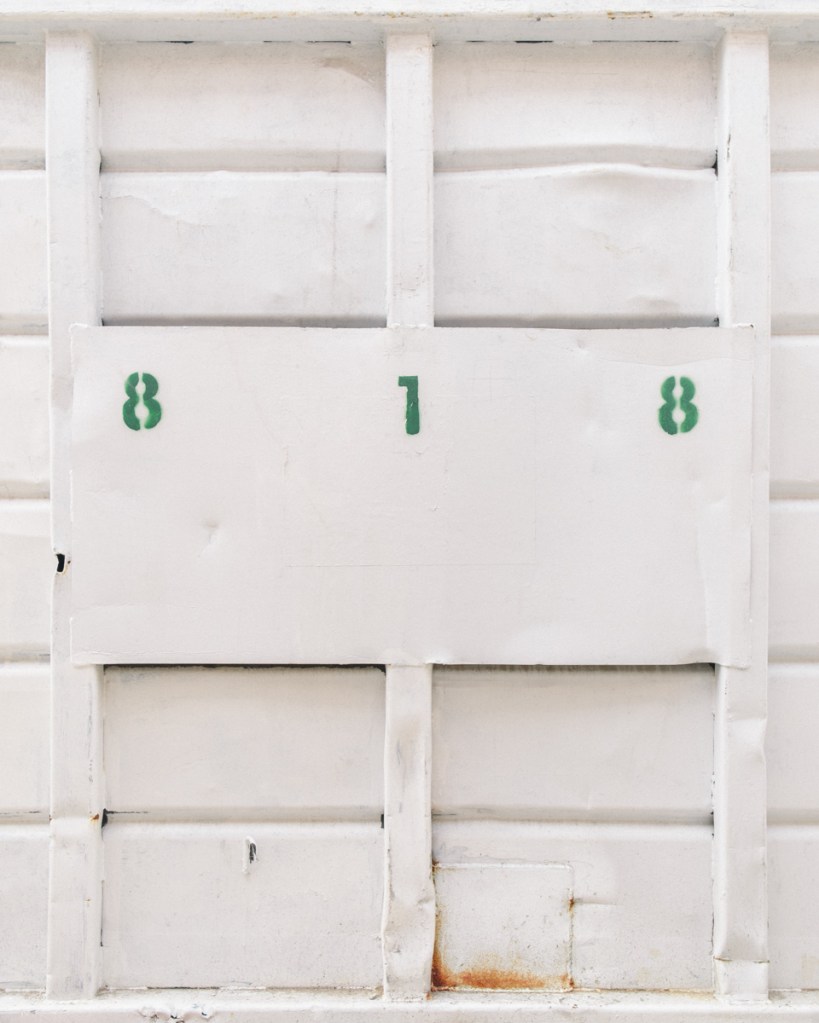
The series we’re showing is called “Hub of the West Valley,” with refers to Reseda, a town in the San Fernando Valley that’s probably most famous for being where Daniel LaRusso moved in the original Karate Kid.
Given that our readers are spread out around the world, would you mind giving the most basic breakdown of how the Valley works?
Danny Duarte: The San Fernando Valley is even more of an urban sprawl than Central Los Angeles. Most would say it’s one big suburb, but I’d argue it’s a strange mix of urban and suburb. It’s unique. I have yet to see something like it anywhere else. It’s usually hotter, less dense, not well known, and looked down upon at times by those on the other side of the mountains, which is what initially inspired the series.
People would ask me where I’m from I would say “Reseda” and always followed by “Where’s that?”. I never took offense, but I was surprised that a lot of people in Los Angeles were not very knowledgeable about the Valley or Reseda at all. I started to photograph where I grew up to show everyone and it became a wonderful journey that would make me think about the environment I was raised in, how I remembered it as a kid, and how I see it now.
I explored where I used to live and walked around places, I had only experienced from the perspective of being in a car. Experiencing the neighborhood I had lived for over 30 years on my own since I wasn’t an outgoing kid growing up. Not only do I get to show people where I’m from, but I also get to rediscover it, which made me appreciate it more.

JB: How it’s different than LA proper?
DD: The Valley is separated from the rest of Los Angeles by mountains so it can feel like another city. A lot of people are not aware that the Valley (except for Burbank and San Fernando) are part of the city, not just county, of Los Angeles.


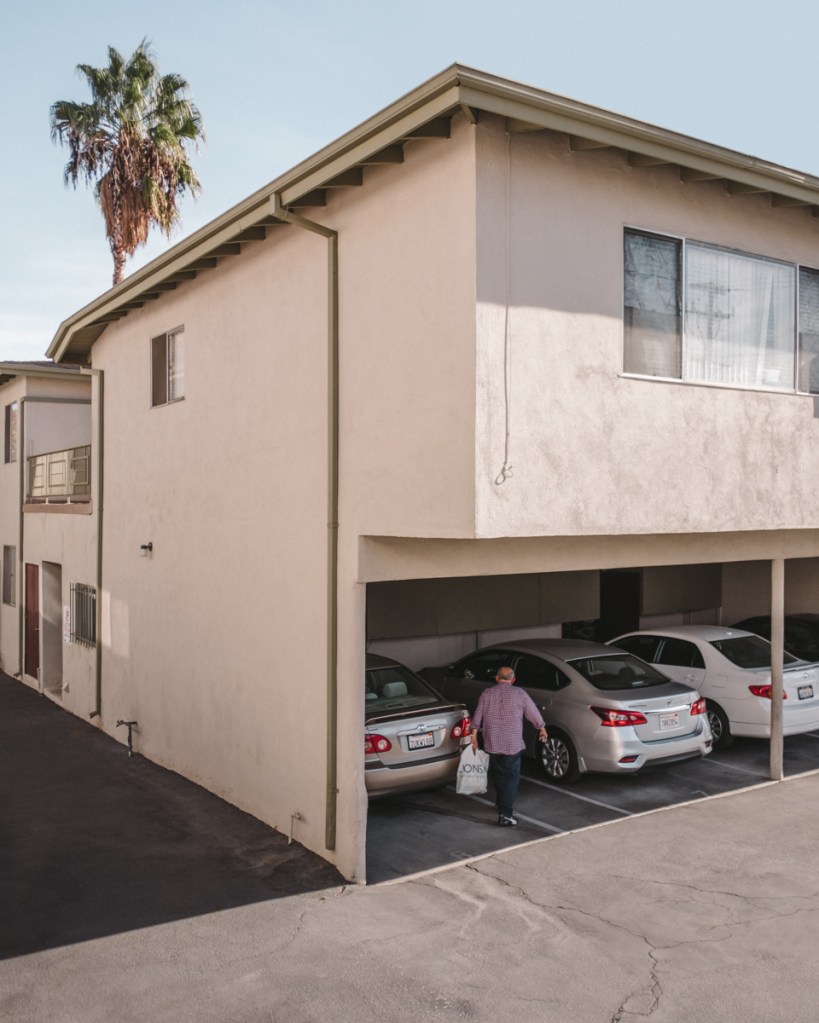
There’s A LOT of parking compared to the rest of Los Angeles. I’m not a fan of it but people say that’s one thing they enjoy about visiting the Valley.
I don’t see that much of a difference since most of Los Angeles is not so tall apartments and single-family homes. The main difference is that the streets are wider, and the buildings aren’t as tall in the Valley, so it feels a lot more spread out.
JB: (Is it as simple as rich folks in the hills, and poorer folks live down below, where it’s hotter?)
DD: Pretty much. Usually, the north and south towards the mountains are where the rich live and it gradually shifts inward down the hills. It’s not as clear as saying south/north/east/west of a certain street. It’s hot all over the Valley but the richer areas do have more greenery than the rest.

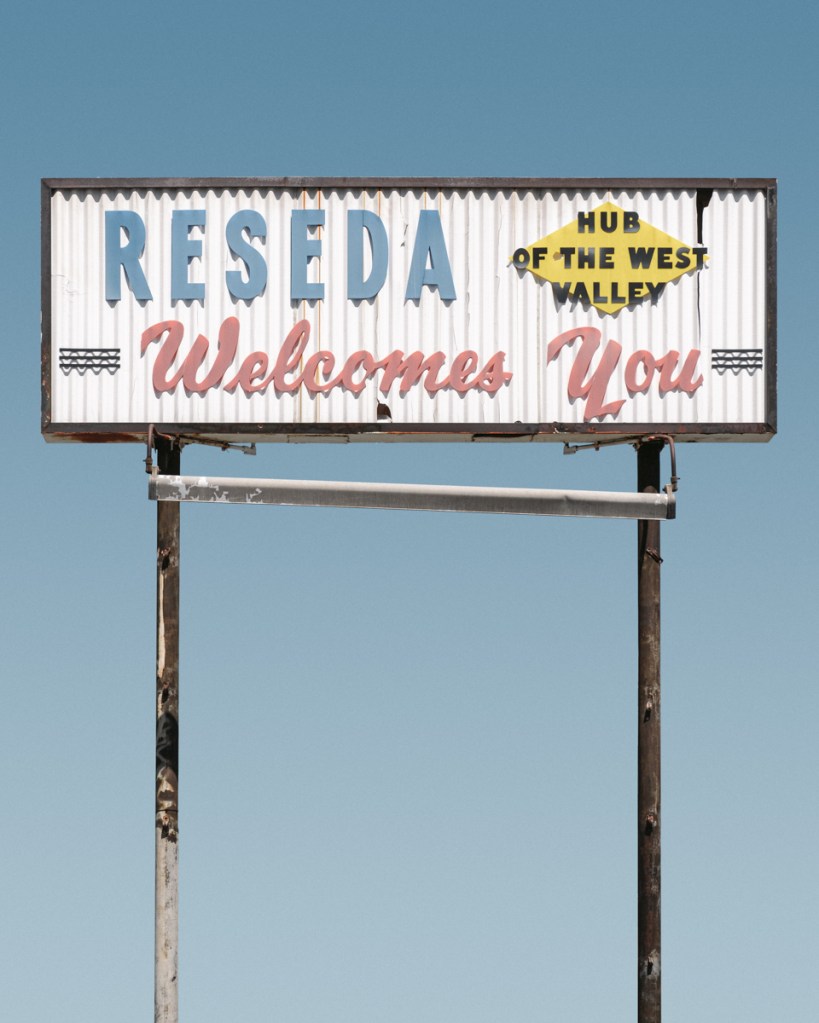
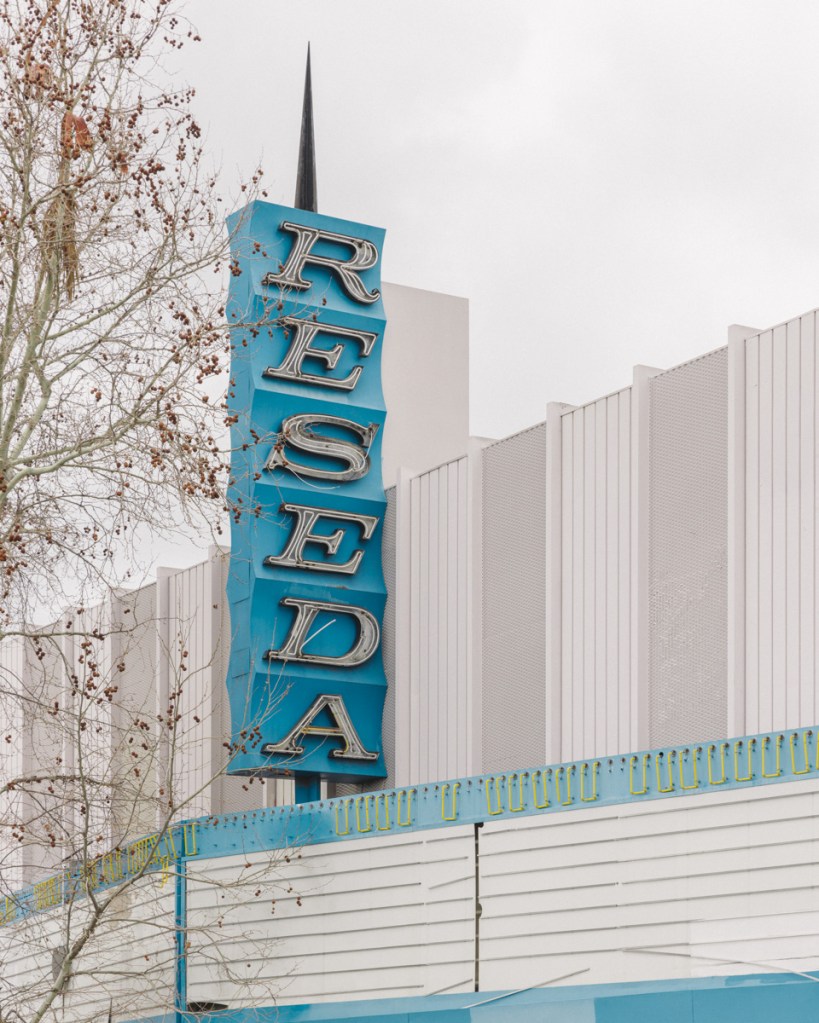
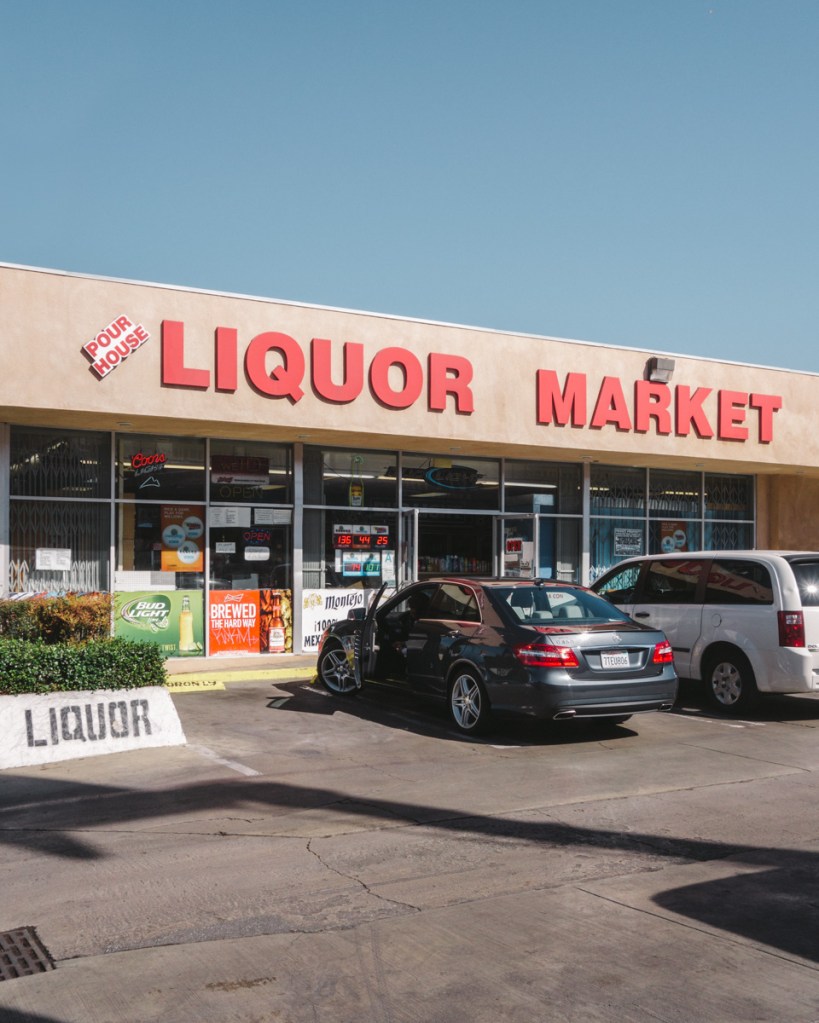
JB: With respect to Reseda, and this series, we see a lot of signage.
The town’s name is a repeating motif.
I just looked it up, and in Spanish it means “prescription.”
Do you want to the word to have double meaning?
And in general, what attracts you to including text within the imagery?
DD: Originally inhabited by the indigenous Tongva people, the name “Reseda” originated from a plant found in regions with a similar climate.
There’s no double meaning. I love the different typography and graphic usage of Reseda. I also wanted to show it as much as possible, so people remember the name. It’s another chance to elevate the neighborhood.


JB: I’ve spent a ton of time in SoCal over the years, but am ashamed to admit I only know the Valley from driving through, between San Francisco and LA.
One time, the traffic was so bad, I actually went up and over Malibu canyon, at night, just to get out of there. (This was 20+ years ago.)
Another time, I remember just baking, as I was stuck in traffic.
Cooking in merciless sun.
Though I know you gave your description of the Valley above, I know it’s more or less surrounded by mountains, and I imagine climate change has been making things hot as heck in summer.
So that’s my question.
Is the changing weather changing the culture or vibe at all?
DD: Oh yeah. The Valley is HOT. It has always been hot for as long as I can remember so the vibe out here has always been the same. You go down to the beach or accept the heat and try to adapt for a couple months until it cools down. They have started painting some of the streets gray as an attempt to cool us down. They are also trying to plant more trees to provide the Valley with shade so hopefully that will help.

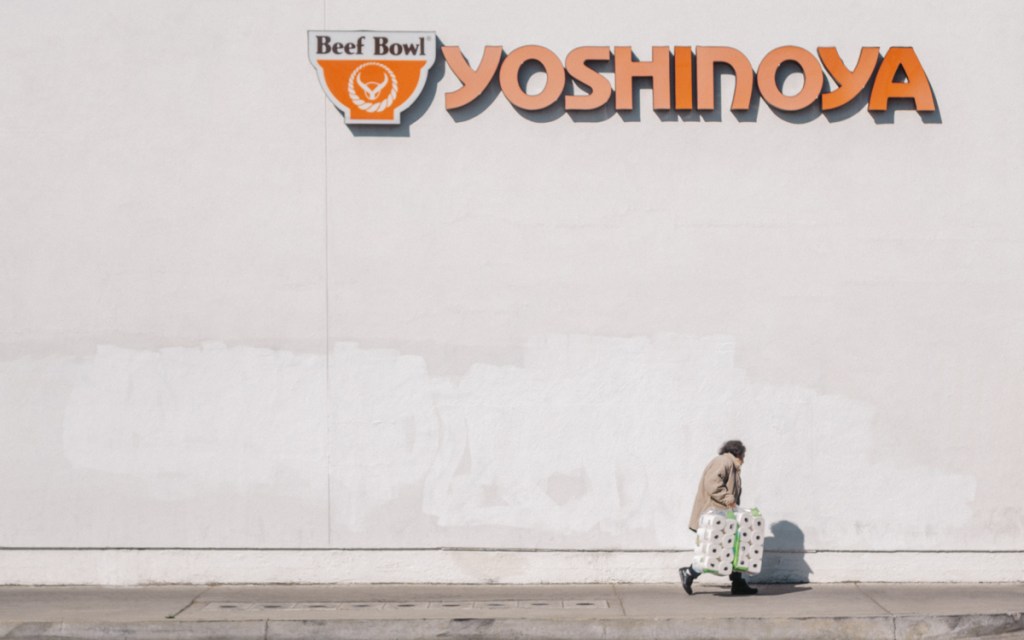
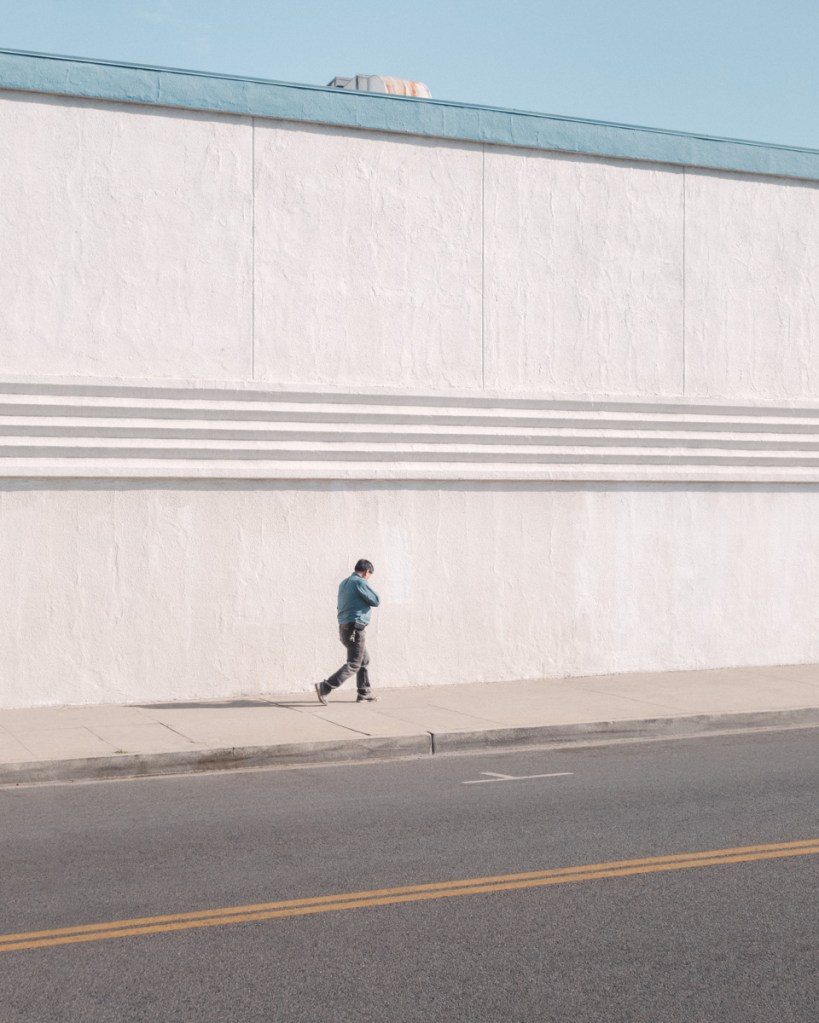
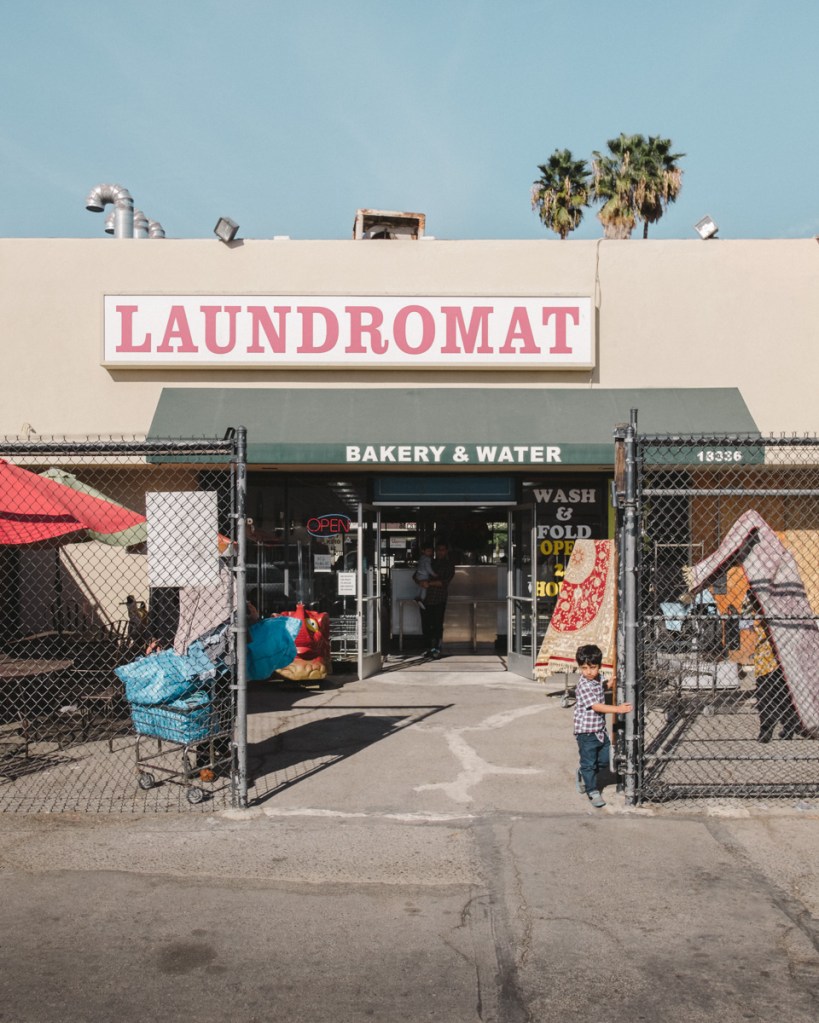
JB: In the series, when we see people at all, it’s the lone figure, set against an architectural background.
Or in one case, a mother and her two kids.
Given the sunny color palette, it gives a sense of isolation, and loneliness, despite all that solar intensity.
Is this just because of car culture, or it something more specific to the place and time?
DD: I think Los Angeles can be an isolating city even though there’s millions of people here. It’s insanely spread out and almost everyone drives so I’d say car culture is one of the main reasons for that. And when you get to the Valley it gets even more spread out.
You don’t see a lot of people walking in the Valley. I bike, walk, and ride the bus and the sidewalks are bare most of the time or there’s one person walking and it’s usually to their car. Compared to other cities I have visited where there’s people walking everywhere it can feel lonely out here when you’re the only person outside and everyone else is in their car.
I could go on for hours about the negative impacts of building a city around cars but the photographs of people by themselves is how I have always felt growing up in Los Angeles. Surrounded only by the sun, concrete, asphalt, and stucco.
Although, I don’t view it entirely as a negative. There is peace and quiet that comes with it which I do enjoy. Sometimes you need to be alone to recharge and it helps a lot when the sun is always shining.
JB: Finally, you’re a young guy. What do you hope to accomplish in your photography career?
What are some of the goals you’ve set for yourself?
Or is it more about enjoying the process, and seeing what happens?
DD: I want to create and show work in print and galleries that expresses how I feel and see the world around me and to hopefully encourage others to slow down and be more aware of their surroundings because there’s a lot of beautiful moments and architecture we miss out on. Teaching is also something I have thought about. I have always loved helping people with their photography, designing books, retouching, and lighting. It’s very fulfilling.
Thank you for taking the time to look at my work. It means a lot.

 Sunshine and Olly
Leave a comment