I’ve been less engaged than in other Presidential contests, perhaps because I’ve felt stunned ever since the Biden-Trump debate this summer.
During my years as a columnist at A Photo Editor, I wrote about politics often, and some of my most memorable moments came from the Clinton-Trump debate in 2016, (which I watched in public at the Hammer Museum in LA,) and the Biden-Trump 2020 affair, in which Biden yelled, “Will you shut up, man!”
On both occasions, I had powerful, correct instincts towards a Trump, then Biden victory.
This time, though, I felt like Daniel Kaluuya in Get Out, as reality fell away and I descended into a paralyzed netherworld.
Biden couldn’t finish his sentences.
He stared into space like the worst caricature.
And Trump lied about doctors in Blue States murdering babies after they were born, with no pushback.
“Fuck,” I thought, “the Dems are toast if Biden is the nominee. It’s over.”
Image courtesy of the NYT
But Kamala replacing him, and Trump’s assassination attempt, happened so quickly, the news took on qualities of a fever dream.

And I read the news, extensively, every day.

Hence my conundrum.


In America these days, with a (nearly) evenly split republic, I suppose it might be easier to tune it all out.

But so few of us actually live in places balanced by the other side.

That, along with the ease with which social media promotes vitriol, is the main reason people can so easily demonize each other.

Prejudice is more difficult to maintain, if you meet, know, and like people from an out-group.

So a New Yorker living on the Upper East Side, who only travels to cosmopolitan places, or Deep Blue beach enclaves, can think whatever they like about some beefy Rancher from Central Texas, but the two are not likely to cross paths.

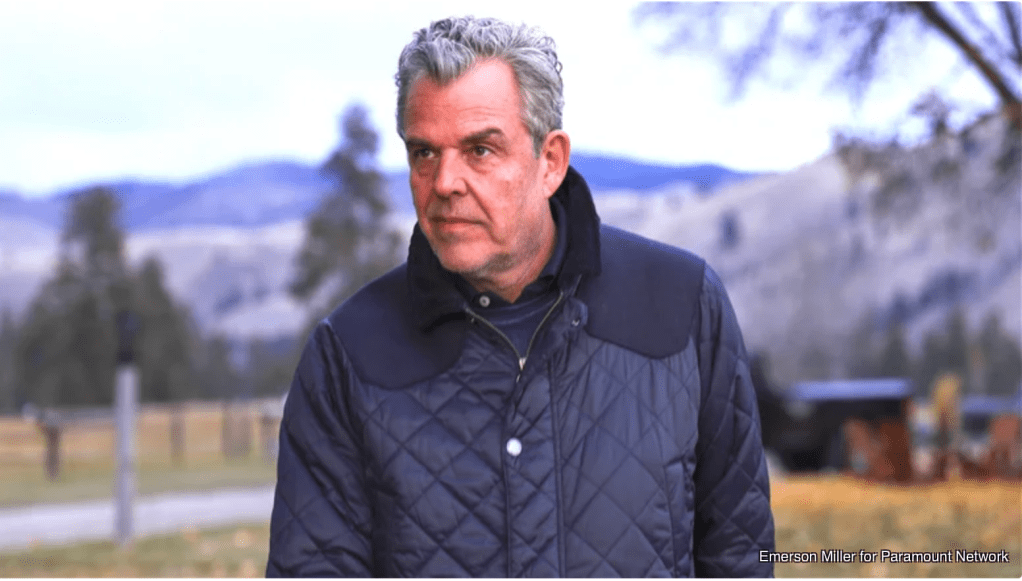
(Conversely, it makes the evil-city dwellers trying to invade Montana, in Yellowstone, 2-dimensional characters in the opposite direction.)
English actor Danny Huston playing a nefarious city-dweller/ unscrupulous land developer in Yellowstone. Image courtesy of Looper
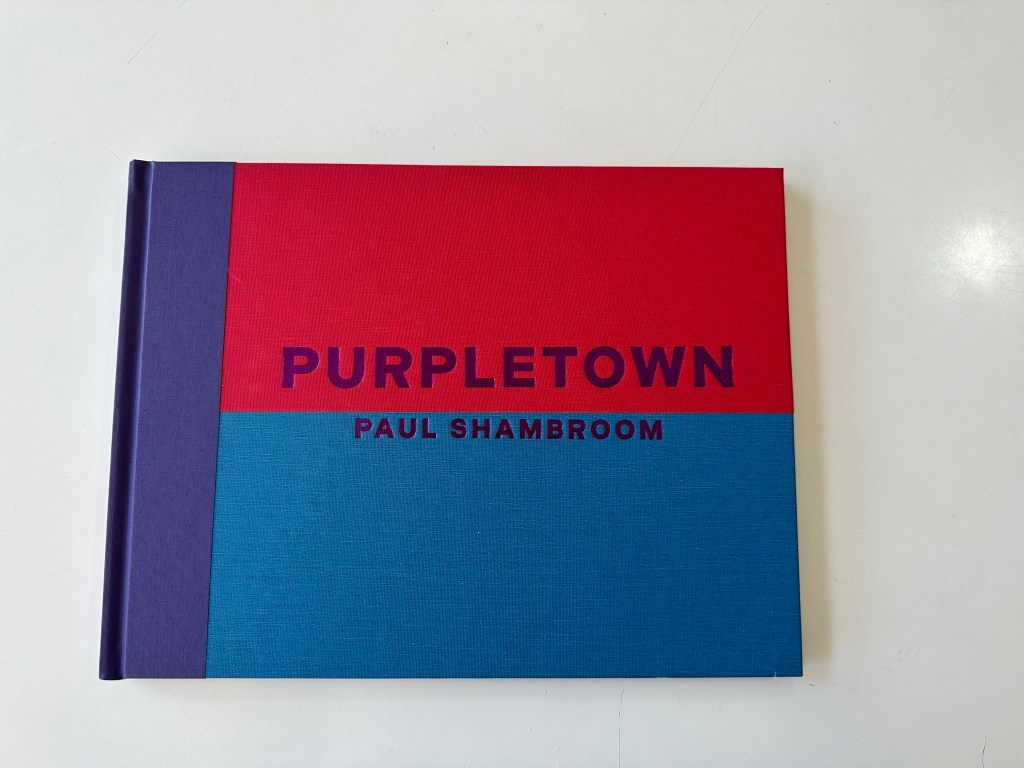
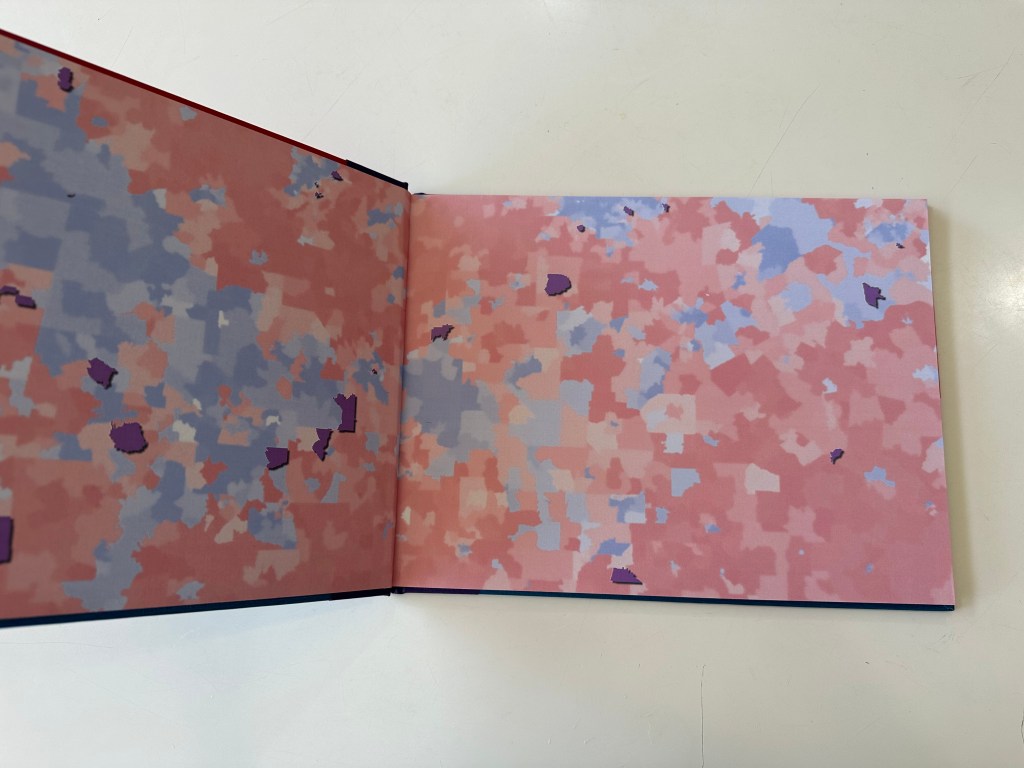
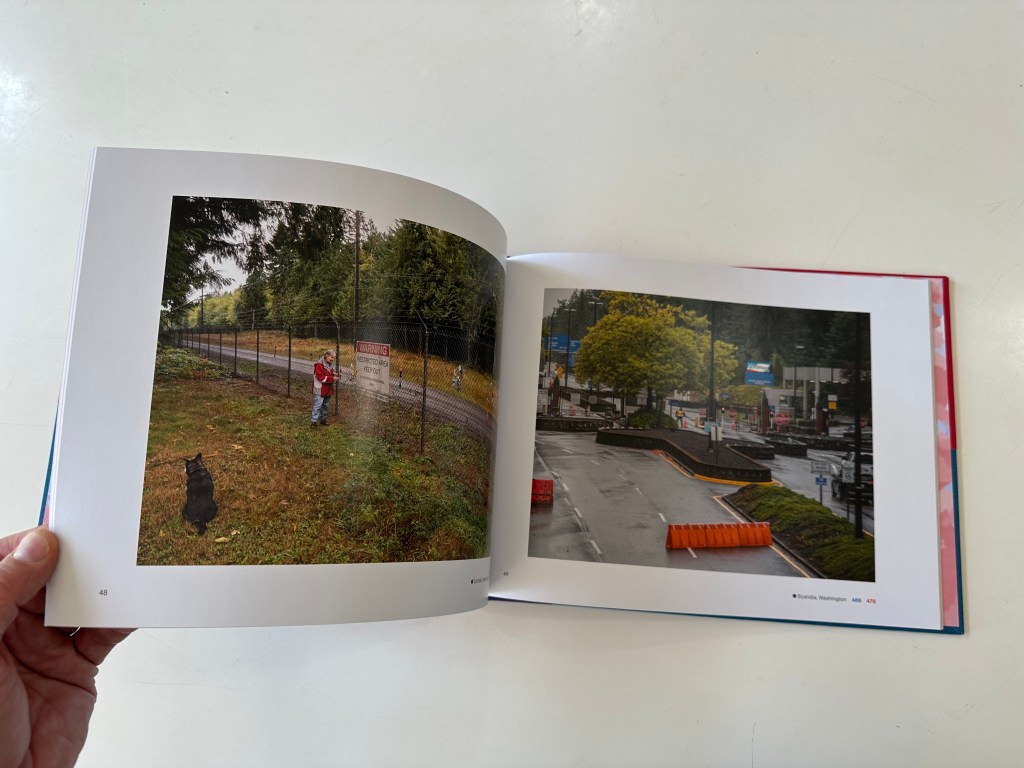
It features a multi-year project in which the artist traveled to municipalities in the US that were tied, or virtually tied, in the 2020 election.
Places that were evenly split, rather than just metaphorically.
These towns were located in States like Iowa, Illinois, Maine, Minnesota, Virginia, Oregon, Wisconsin, Pennsylvania, Washington, South Dakota and Colorado. (Maybe Georgia was in there too?)
They were towns all, with the exception of Colorado Springs, a small city on the southern end of the Denver Metro area.
(Which has some of the worst drivers I’ve ever encountered.)
It’s easy to appreciate the entirety of the book, and the scope of the project and commitment.
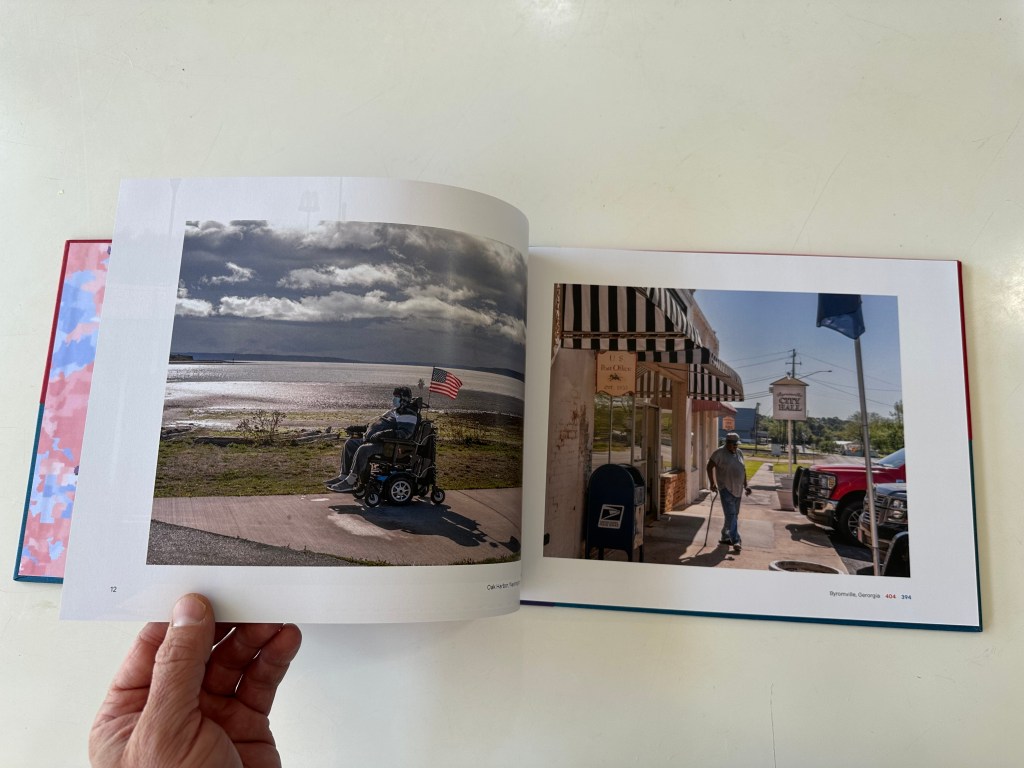
From the first page, it’s extremely well written and thought out, with many strong photos.
This is art as journalism, as Paul wanders, roams, but also interviews people, gets involved, learns, engages, and exercises his curiosity and creativity.
There are interview sections included in an appendix at the back, to go along with opening and closing statements.
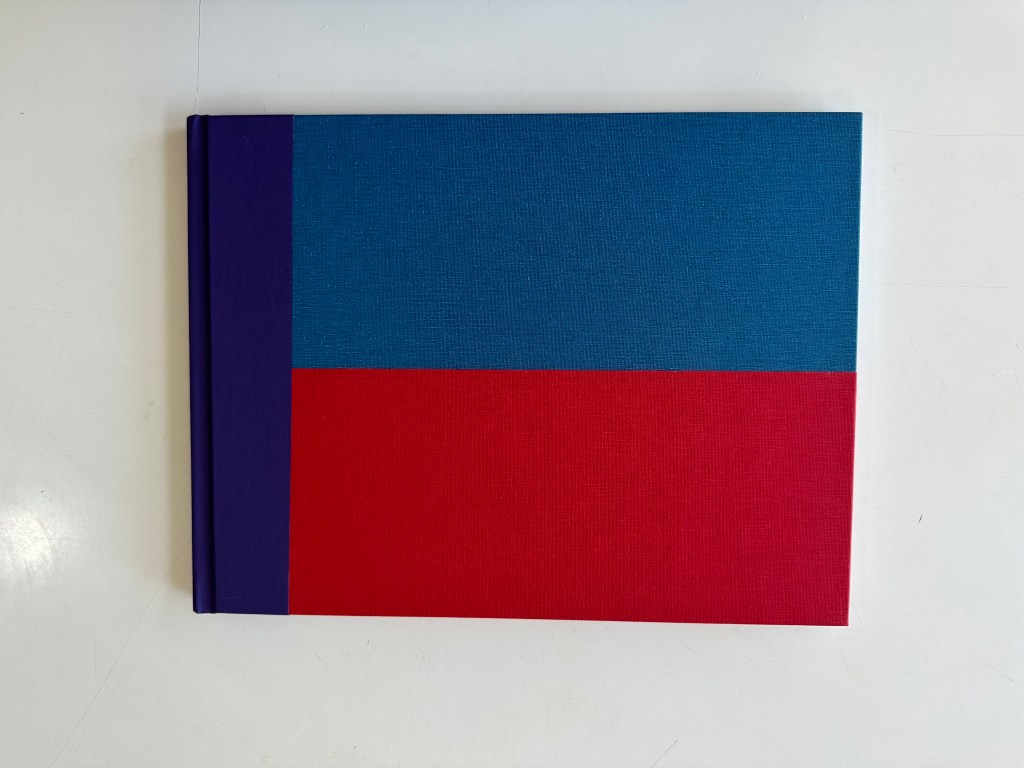
I like the cover, the end papers, and the idea that focusing on places where people do coexist can perhaps teach us something.
Such conclusions as were drawn focused on the fact that most, if not all of these places had people who relied on their community members.
If you need people, and help them when they’re down, it’s harder to hate them because they prefer the other political party.
(I mean, there are only two choices, right?)
I like the photos, overall, (more than love them,) but they certainly give a visual sense of the visited places.
Overall, I think this is an excellent book, and was glad to spend time with it.




 Sunshine and Olly
Leave a comment