Bruce Lee is a legend.
You don’t need me to tell you that.
He’s also been dead for 50 years, yet is the titular head of a commercial empire that sells merch, and develops programming, like the ESPN documentary “Be Water.”
I’m not saying it’s a lucky legacy though, because the wealth and fame still didn’t offer Bruce, or his son Brandon, long and healthy lives.
Both died tragically, young, in service of their film careers.

In the brief time he was super-famous, making films, Bruce created enough impact that people still invoke his name, daily, all over the world.
Hell, I follow his account on IG and Twitter, and as I said, HE’S BEEN DEAD FOR 50 YEARS.
How is this possible?
As usual in America, it’s all about the money.
Today, though, we’re going to talk (briefly) about China.
Because that’s where funding originated for the martial arts film, “Birth of the Dragon,” from 2016, which I just watched on Netflix.
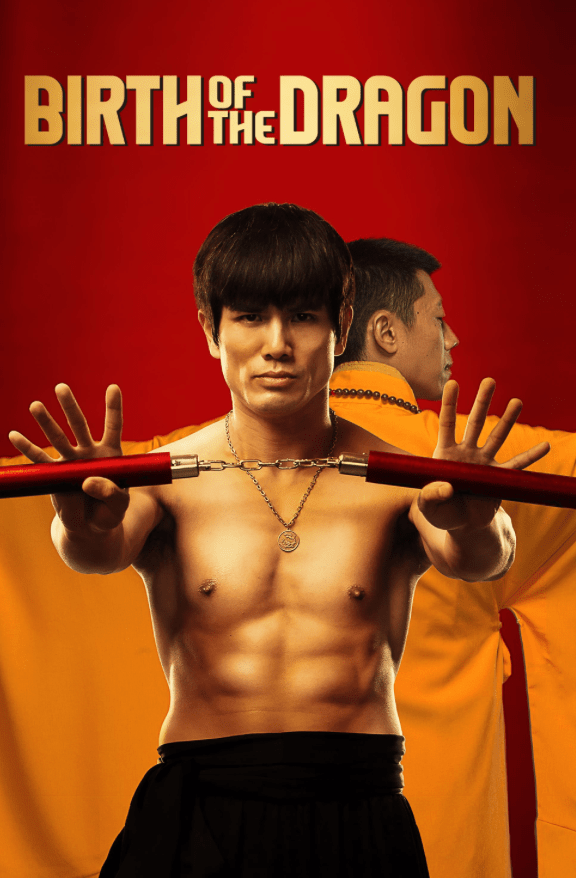
It’s not a good movie, (in the traditional sense,) but like “Hero,” (one if the best films of all time,) this story had some serious PRC propaganda undertones.
Enough that it’s worth writing about.
To be clear, (my favorite phrase,) Hollywood has been promoting “American values” across the world for a century.
I’m not the type to think it’s cool if we do it, and awful if they do it, so it won’t be that kind of article.
Still, I find it fascinating.
While Jason Scott Lee did a great job playing Young Bruce in the 90’s flick, “Dragon: The Bruce Lee Story,” that version of events was supported by the Lee family.

This one was not, and it’s easy to see why: it casts him as a puppet of Mainland Chinese Taoist philosophy.
In reality, Bruce Lee was (slightly) Caucasian, and grew up a star in Hong Kong, before moving to America.
As the man who made Kung Fu globally famous, (mostly posthumously,) Bruce represented American values: flash, style, individuality, and arrogance.
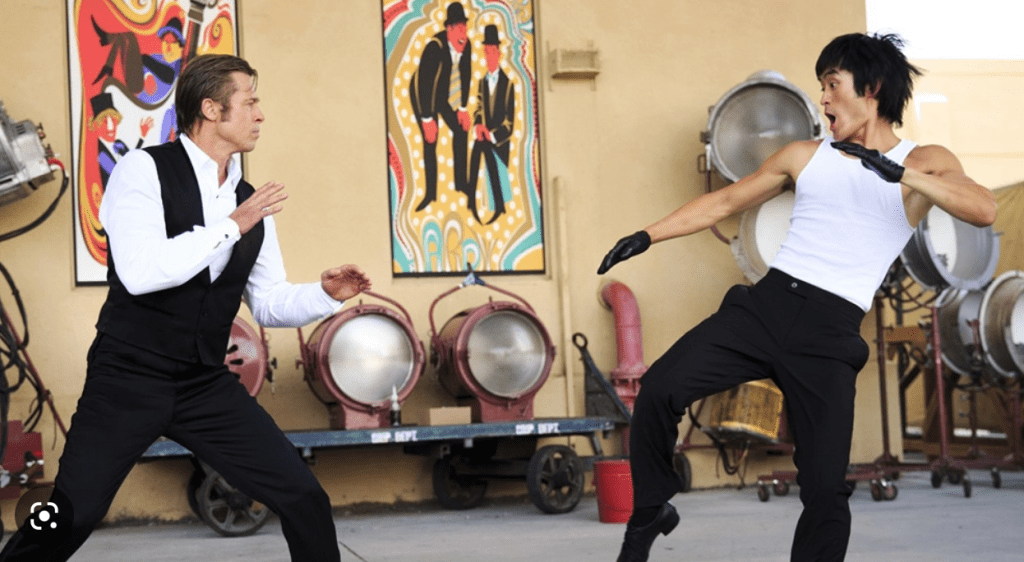
He was such a cocky guy, Quentin Tarantino even satirized it in “Once Upon a Time… in Hollywood,” for he was criticized for being culturally insensitive. (I happen to agree, though it was an electric scene.)
In “Birth of the Dragon,” the story created a highly fictionalized version of a supposed true story, as it does not seem to match with recorded history.
(Hence my accusation of propaganda.)
The subtext is that only a properly modest, humble Shaolin monk, from Northern China, could teach Bruce Lee how to grow up enough, (maturity-wise,) to handle his burgeoning responsibility.
That’s the whole message.
The Mainland monk comes to San Francisco, and grinds some Chinese philosophical wisdom into Bruce, (without his knowledge, because the Monk is that smooth.)
Then once he’s done his job, he leaves.
The meta-message is encoded in a story in which they created a fictitious, handsome-blonde-white-guy character, (VERY loosely based on Steve McQueen,) to keep the American viewer sitting still, while they endure the lesson:
Brash America will not win!
China has spent thousands of years accruing wisdom, so, as usual, the young upstart is fucked.
Obviously, no American would sit through a film with that as the main theme, so they snuck it in the back door.
Rotten Tomatoes and all the critics hate this film.
It’s supposed to be awful.
But I enjoyed it.
Great fight choreography, and the Shaolin monk, played by Xia Yu, is so damn likable.
They did a great job shining up their values, but having studied Kung Fu for years, what they discuss in this film is real.
Martial arts are about personal development.
Even more than fighting, or being tough.
It’s a lesson my Kung Fu Big Brother, Dave Duran, tried to teach me, over and over, the last year before he died.

It’s all about inner discipline.
If we can’t learn to handle our temper and our emotions, which reside in our body, how can we expect handle things in the wider world?
If we can’t keep our center, when stress builds in training, how will we expect to succeed when life throws its best punch?
 Sunshine and Olly
Leave a reply to Stanl B. Cancel reply