-
Stay Open, and Good Things Can Happen

Hi, everyone.
I haven’t forgotten you.
I know it’s the biggest gap between weekday posts, (since I launched the blog,) but there’s a good reason for it.
Finally, some good news!
I’m currently in Tulsa, OK, for the biggest photo assignment of my career.
Something I’d been working on for months finally came to fruition!
While I’ve obviously used Sunshine and Olly to help process my pain, and understand the world, I don’t want to suggest I see the world through gray-colored glasses.
Quite the opposite!
I’m a hopeful, optimistic, positive person.
Which is why I’ve been fighting so hard to overcome trauma, and find more joy for my family.
I can’t share details about the shoot, but the subject that brought me to Tulsa is about as positive as it gets.
The best of the best.
So of course I (randomly) end up staying in the heart of Greenwood, the historic Black Wall Street district that was attacked in the worse Race Massacre this country has seen.
(Beyond what America did to its indigenous population, obviously.)
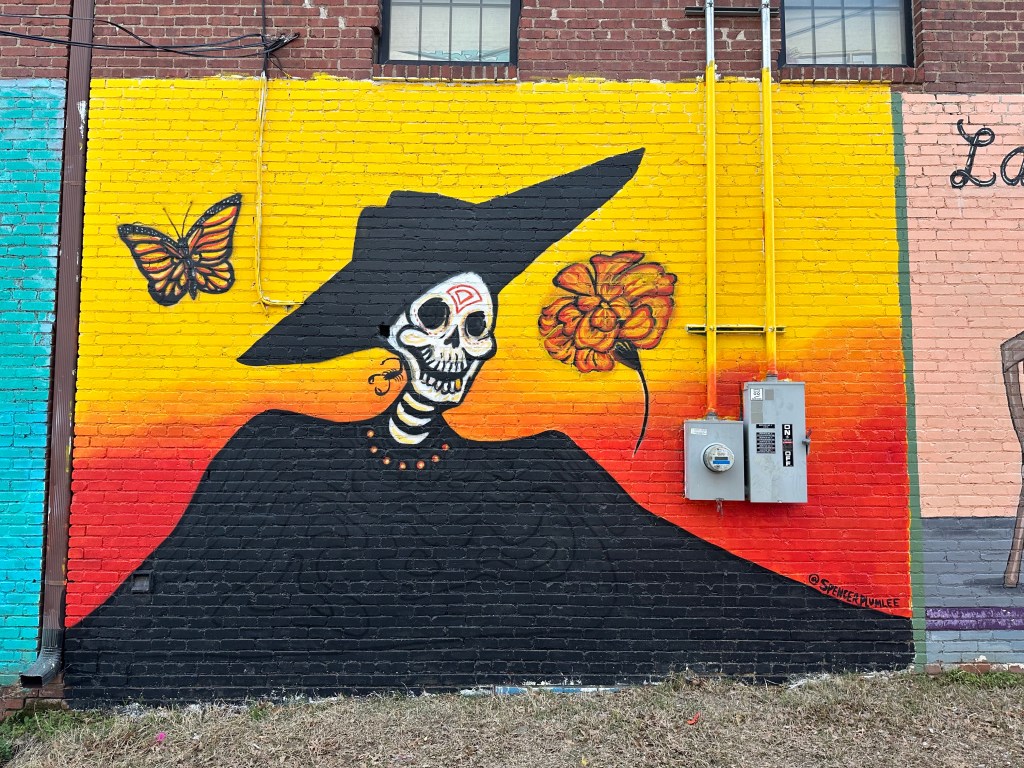
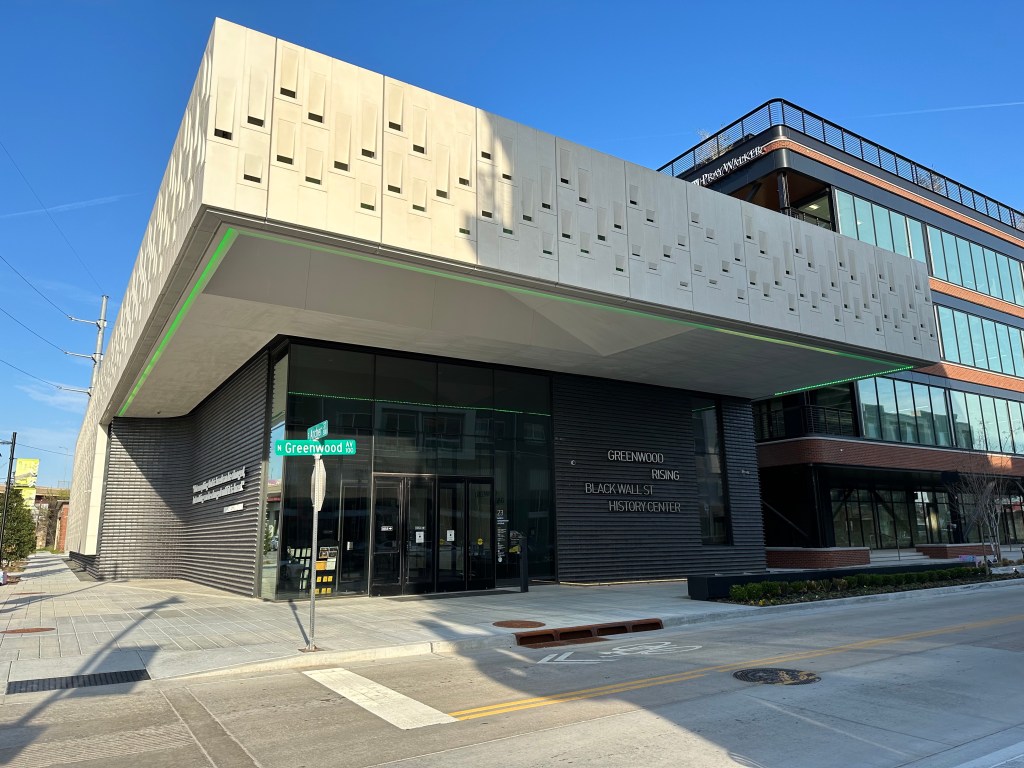
There are a heap of fancy lofts across the street from the Black Wall St History Center
I don’t want to turn a positive piece into a downer.
Really, I don’t.
The message today is that good things CAN happen, if you persist, stay open, and keep spreading the positive energy.
Look for ways to support others, as you seek support yourself.
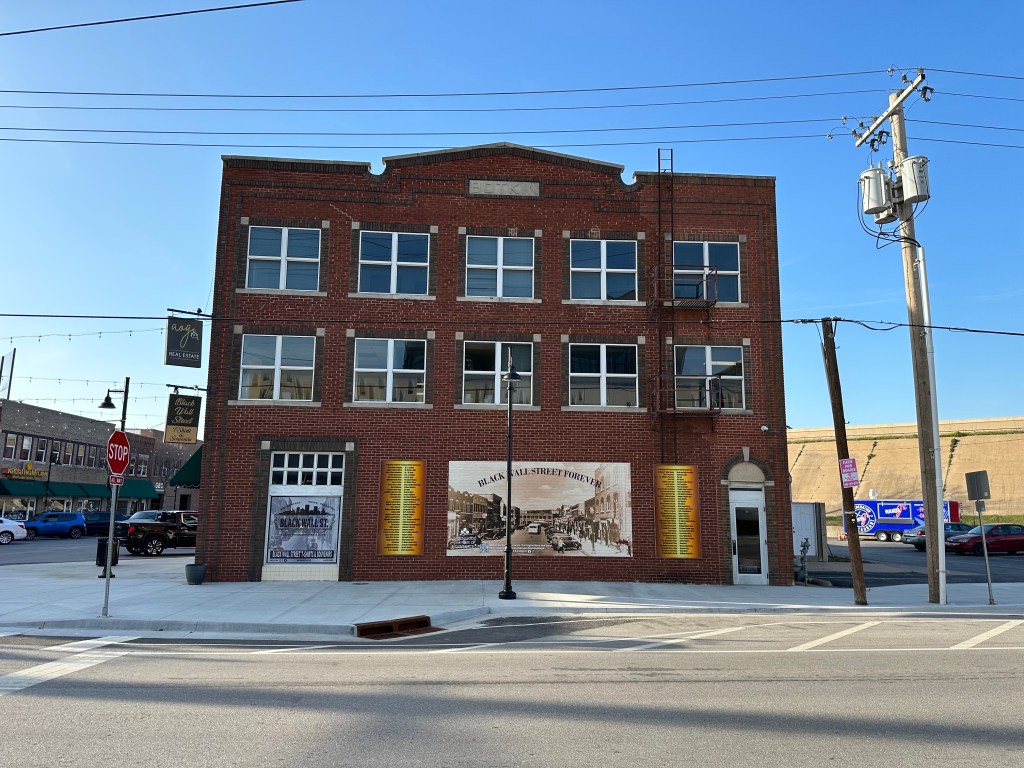
There is still one block left, featuring Wanda J’s Soul Food restaurant, and some merch shops. 
That’s why I’m here.
But since I can also report that a baseball/soccer stadium sponsored by a casino, and a host of fancy lofts, were built upon stolen Black land, because I’ve now seen it with my own eyes?
Gotta share that too.
Catch you next week, when I’ll be back home and settled again.
Stay cool out there!
These days, the neighborhood is bordered by highways, and a freight train line.
-
Expectations Are The Worst

Expectations are a killer.
I’m not the first to theorize this, but I do want to talk about it briefly today.
It’s a concept most of us take for granted, yet in my experience, is often a major driver of misery and suffering.
To expect something is to believe it will or should be so.
Therefore, an expectation exists as a projection of our imagination.
Our wants, needs, and desires.
And as figments of our mind, they serve to reassure us how things will, or should, turn out.

I expect the Xi-Putin friendship will not go well for anyone. (Image courtesy of NPR) Like my article about Hollywood’s obsession with the Deus ex machina, we’re talking about a narrative that we’re sold, absorb, and then base our behavior accordingly.
(Though far too often, exceptions hit us on a subconscious level.)
For example, after 18 years of living in Taos, I came to expect a certain amount of good weather.
We’re talking about day after day of deep blue skies, and lots of gorgeous sun.
As did most of the long-time residents here.
So this 5-month-winter, with dismal light, and day after day of flat, gray skies, has not just cut back the weather people use for “happiness,” but it’s also hit people in the Climate Change wound.
Proving such things are SO FAR out of a person’s control is distressing.
Pivoting to politics, we could talk about the anger people feel, because they expected to have good jobs, a social safety net, or a government that would protect them from things like artificial intelligence, monopolistic corporations, and deadly fentanyl.

The monopoly guy from Ace Ventura 2 says, “Hello!” Hard times lead people to get extra-upset, not just because life is tough, but because they’re super-disappointed things didn’t work out like they were supposed to.
Like we expected they would.
Certainly, Trumpers are always furious that things are not the way “they used to be.”
Don’t forget: the first word of MAGA is make.
To make is to compel. To dominate.
America expects to dominate the world, because we did for the past (not quite) 100 years.
China expects to dominate the world, because they’re a mega-populous, ancient, successful nation, with the world’s biggest economy.
Russia expects to dominate the world, because they’re an aggressive, powerful Empire, and the biggest country on Earth.
Great power battles always create collateral damage.
Didn’t mean to drift into Geopolitics.
Maybe I’ll just land the plane here.
If you’re stressed about having your expectations met, in 2023, it might be time to question the expectations.
If we change what we think should happen, or change our plans so something different might happen, it tends to lead to better outcomes.
Rather than doing the same thing over and over, and expecting a different result.
Morning dog walk. The light was (almost) luminous for a minute, before it became flat again.
-
Need to Make a Career Change?

I just had a friend reach out with a story to share.
This person is dealing with some real difficulty, (as many of us are,) but also grappling with the question of perhaps not being in the right profession/field, at the moment.
Obviously, I’ll share no details, but when I was asked if I had thoughts on career changes, I took a moment to consider how best to answer the question?
As writing for Sunshine and Olly is one of my primary stress-relief techniques, but also a form of art I truly love, this seemed like the way to go.
Especially as I was able to get a proper hill walk with the dogs this morning, given that the sun finally came back!
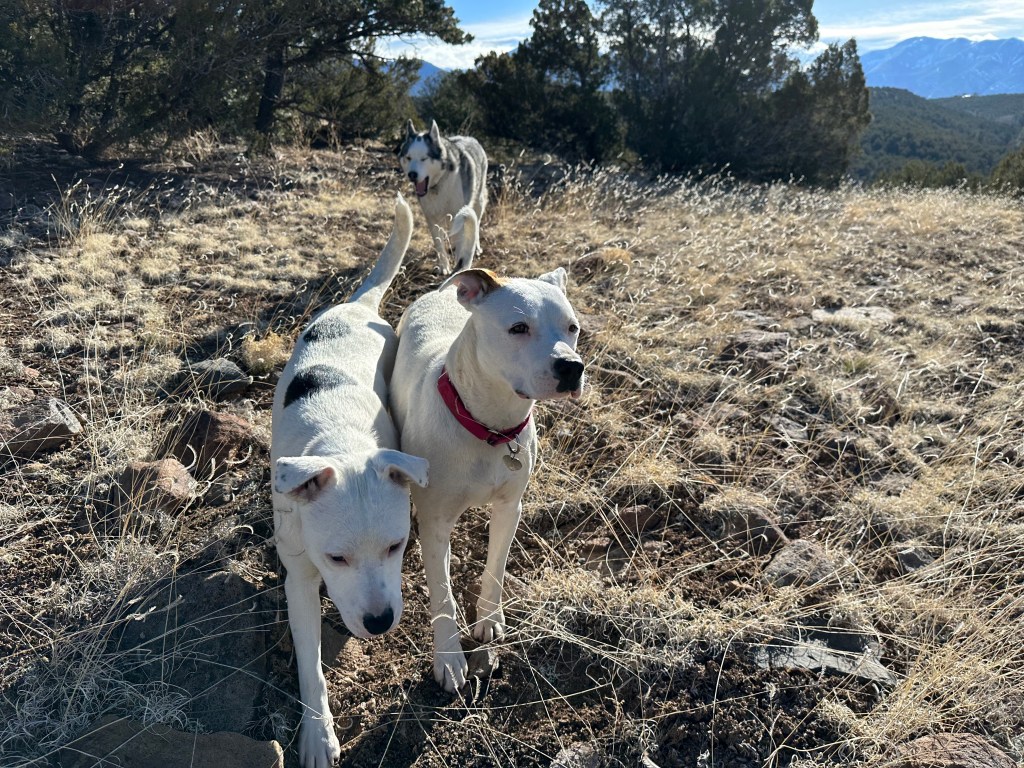
Sunshine, Olly and Billy on the hill. 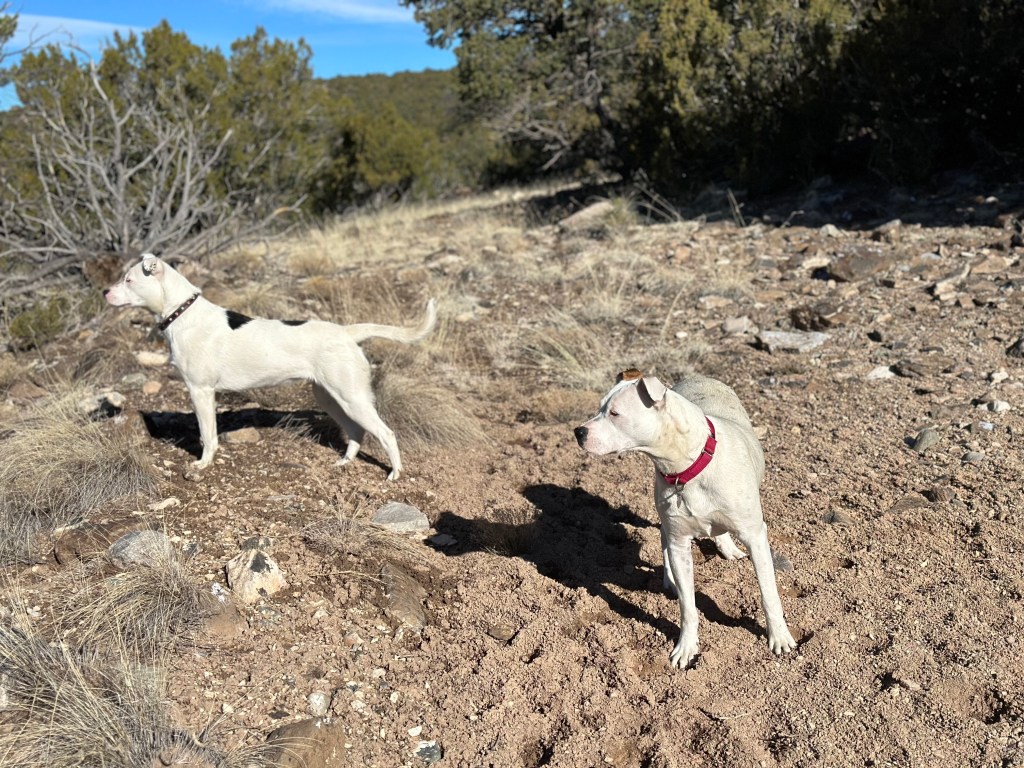
Driving into Brazilian Jiu Jitsu class with Amelie yesterday afternoon, I was officially convinced I might never see the sun again.
So of course the clouds broke, around 5pm, and it was glorious.
Just long enough for me to remember that when we’re trapped in unhealthy systems, or environments, it is really hard to solve problems, and figure out big picture ideas.
Just like people in Russia, Scandinavia, and Canada know their winters fuck with their sanity, we just lived through that, in a place that’s supposed to be one of the sunniest in the world.
The sun came back, and I want to use that positive energy to give an answer to my (anonymous) friend.

The first deep blue sky I’ve seen in months.
Artists are permanent shape-shifters.
Certainly when we’re {foolish?} enough to try to make a living out of being creative.
I’ve blogged enough over the years about that subject, so we’ll leave it alone.
If the specific question is how to make a career move, either laterally, or vertically, I think there are questions we can ask ourselves, and moves we can make, to enable decisions from a clear-sky perspective.
First of all, if a person knows they’ve been dealing with an inordinate amount of stress and difficulty, due to work/family/health problems, having kindness and compassion for oneself is a great first step.
If you’ve been eating a lot of shit lately, or have life-changing situations going on, accept that those things can and do change your life.
And often they suck!
So step one, figure out how to be kind to yourself, and get even the tiniest break to clear your head.
The clear view perspective If you can’t take a break, double/triple down on investing in yourself.
If you like Yoga, take more classes. Or martial arts. Travel. Eating great food. Making art.
Just pour everything you have into trying to feel good about yourself.
Because we need that self-confidence to embrace change, when it’s heaped upon us.
Step two, once you’re feeling grounded, is to start asking questions.
What do I love to do?
What am I really good at?
How can I imagine spending my time to make money, but when I think about it, I get excited, and energized? (Not depleted, and depressed.)
What communities, when I see them out there on social media, or the mainstream media, seem like they’re offering things that I want and need in my life?
What skills am I doing, in my current job, that have a direct cross-over with other aspects of my industry, or another industry?
Do I like being around a certain type of person, (or a certain type of energy,) and where can I find people like that?
Am I living in the right city/community, for my personal wants and needs?
It’s a lot of questions, I know.
And I could keep going.
But this feels like the perfect way to get moving.
Knowing something is not working is the first step.
I wrote on Monday that I’d gone to Duke University, among the most prestigious and famous in the world.
I hated it.
And I was so miserable.
But it wasn’t until I figured out I was miserable, (as there was not a support system in place to help me sort it,) that I bumped into a person who had the answer.
He too, was miserable, and had found out he could take a semester off, because he had enough credits to still graduate on time.
Immediately, I knew that was for me, and I moved towards making it happen.
I skipped the first semester of my senior year, and moved to Taos for 9 months, because my parents had recently relocated here.
That decision changed the course of my life.
I believe if you’re a kind, compassionate, empathetic, warm-hearted, intelligent, self-aware, open-minded person: you deserve to be happy.
Nobody gets to be happy all the time, mind you, but if you realize that despite being a genuinely good person, you feel stuck, unappreciated, or worse…
It’s time to get unstuck.
Step one, take care of yourself, and get in the frame of mind to tackle the problem.
Step two, ask all the hard questions, and be willing to see yourself in a more positive light than the situation seems to be rewarding.
Step three, take a big leap, believing you can do it, and that your support system will help you as you try.
Catch you next week!

Sunshine and Olly yesterday, before the sun came back.
-
What Does Woke Mean?

Quick post today.
I wanted to tackle a massive issue that’s been in the news lately.
Not only is the term “Woke” everywhere, used both as a compliment and a pejorative, but few people actually understand what it means.
I’m going to give it a shot, right off the top of my head.
“Woke” is a philosophy that acknowledges the reality of historical power dynamics, and seeks to change the inherent unfairness of centuries of dominance, based upon power imbalances.
Power dynamics are the key here.
Power means you can make a person do something. And you don’t have to behave in a way that respects their basic human dignity.
It can be a boss that yells at you, and never faces accountability.
Often, (and most famously,) it means that systemic behaviors like misogyny and racism, which permanently ensconced women and minorities as an underclass, need to be upended.
Unfortunately, “Woke” has gotten a bad name, because like the Israelis, and the French peasants during their Revolution, often times, when people get power, the first thing they want to do is enact revenge against the people that mistreated them.
(Or in the case of the Israelis, kicking a disempowered culture while they’re down, via Apartheid and Occupation.)
It’s not “Woke” to treat people badly on purpose.
(Even if you think they deserve it, because they represent a gender, or race/culture that typically held sway.)
Meaning, it’s not “Woke” to use your power to knowingly disrespect someone, just because you can.
Traditional power structures used gaslighting, as it meant they never had to challenge the message.
Just dismiss the messenger.
You’re crazy!
You’re hysterical!
You’re so angry all the time, it must be you!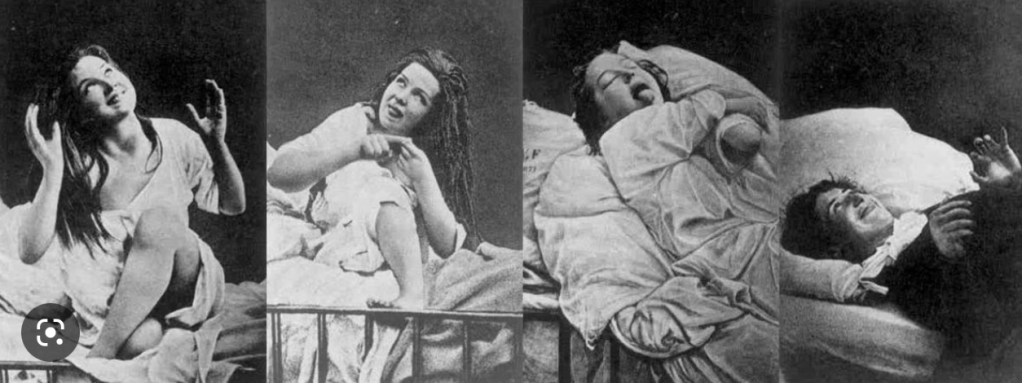
The first image on Google for female hysteria, courtesy of Wikipedia It happens every day.
In other words, if you want to be “Woke,” be cool. Treat people well, and understand that if you have a historically privileged position, try to use it to help others with less power.
If you fuck up, just say you’re sorry.
And if occasionally, you have to see someone else succeed, (instead of you,) don’t go crazy about it.
Take the L, realize it wasn’t your turn, and move on with grace.
Theo with the new horse. His official name is Listo, but Theo renamed him Kevin, as an act of rebellion against my domineering sister-in-law.
-
Make Society Livable Again
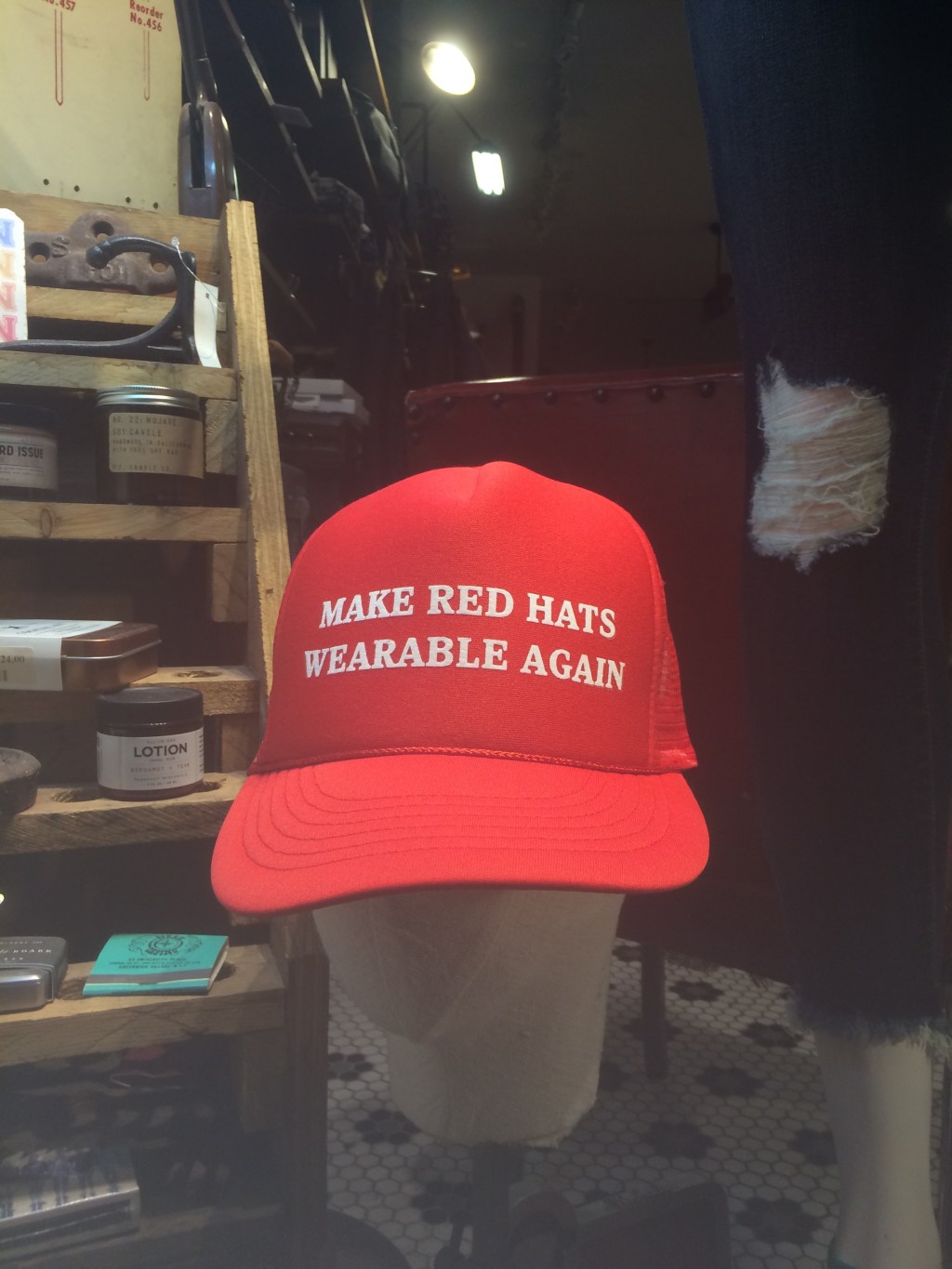
It’s normal to want friends.
To need connection.
Even introverts require some social contact.
(So a big Fuck You to Caity Weaver for encouraging people to be ashamed of such needs in the NYT Magazine this weekend.)
It’s why solitary confinement is considered torture, and therefore is used as extreme punishment.
Yet hundreds of millions, if not billions of people lived through that torture in pandemic lockdown, in the recent past, and it’s rarely discussed.
In the US these days, (and probably elsewhere,) people are struggling, angry, and have lost the ability to calmly communicate with each other. Yet many people are trying to figure out why they’re having such a hard time in a rigged system, right after the world lived through conditions that aged some brains by 10 years.
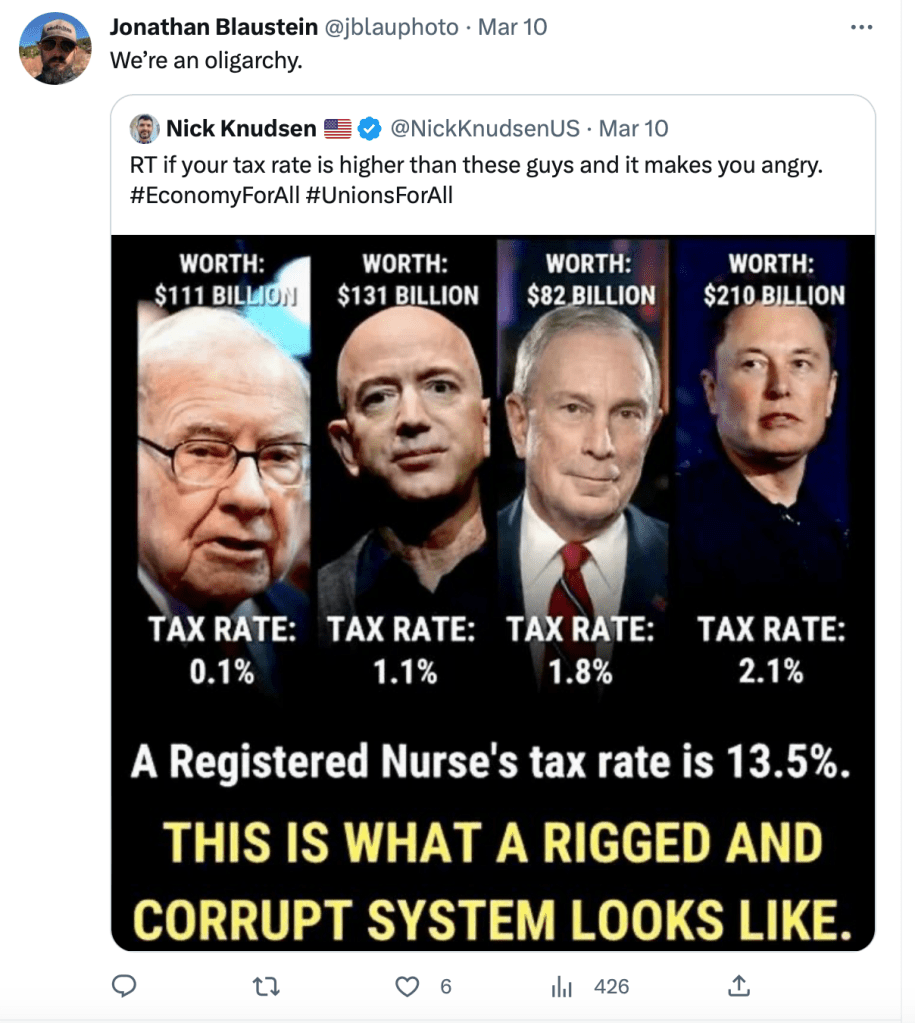
These are hard times, (in my therapist’s words,) as America has succumbed to Oligarchy, yet it is poorly understood beyond the cultural fringe.
When I was a Freshman at Duke University, (where I double-majored in History and Economics,) I took Intro to American History, with Dean Gerald Wilson.

Image courtesy of Duke Athletics My first paper was the assigned subject: “Was the Progressive Era Actually Progressive?”
At 18, I didn’t know even what progressive meant, (back in 1992,) and most certainly didn’t have an informed opinion.
Ever the good student, though, I just needed to read the text book, stake out a position, pull evidence with quotes, and I was good to go.
As such, I got an “A” on the paper.
Not much knowledge was acquired, but in my second semester, I took another History class, from Professor John D. French, which opened my eyes to the “real” US history of conquest and territorial acquisition, which undergirded America’s success as a country.
(This History is becoming “banned” more and more each day.)
I might not have learned if America was actually progressive back then, but I did learn that the concentration of wealth and power, during the Gilded Age, was so bad, it almost broke society.
Miraculously, trust busting, anti-monopolistic practices, and increased unionization, approx 100 years ago, allowed the US to build a middle class, which was (once) the envy of the world.
These days, we know that for one group to have resources, most of the time, another group has to have less.
Which leads to all sorts of conflict.
In an Oligarchical society, the most powerful people are always a super-minority.
Dozens of people, in a nation of more than 330 million.
It’s why they work so hard to keep everyone distracted, squabbling and desperate.
And the Oligarchs fight tooth and nail to maintain the power and control they’ve established.
We’re reading about this reality piecemeal, whether it’s an article about Getty heirs dodging taxes in The New Yorker, or Robert Reich dropping knowledge bombs on Twitter.

The overall narrative, though, never penetrates the minds and hearts of all those angry people.
Don’t be angry at your neighbor, your Mom, or the “other.”
Instead, be angry at the super-rich people who think they should be worth $1 trillion, so you have to decide whether you can afford to buy vegetables for your kids.
I’m telling you: this is officially a time in history when things are fucked up.
A century ago, such conditions led to WWII, and the Holocaust, in which my race/culture was almost wiped out.
Nobody likes a know-it-all, (I get it,) but we artists are the canaries in the coal-mine.
Time for some collective energy to make society livable again.
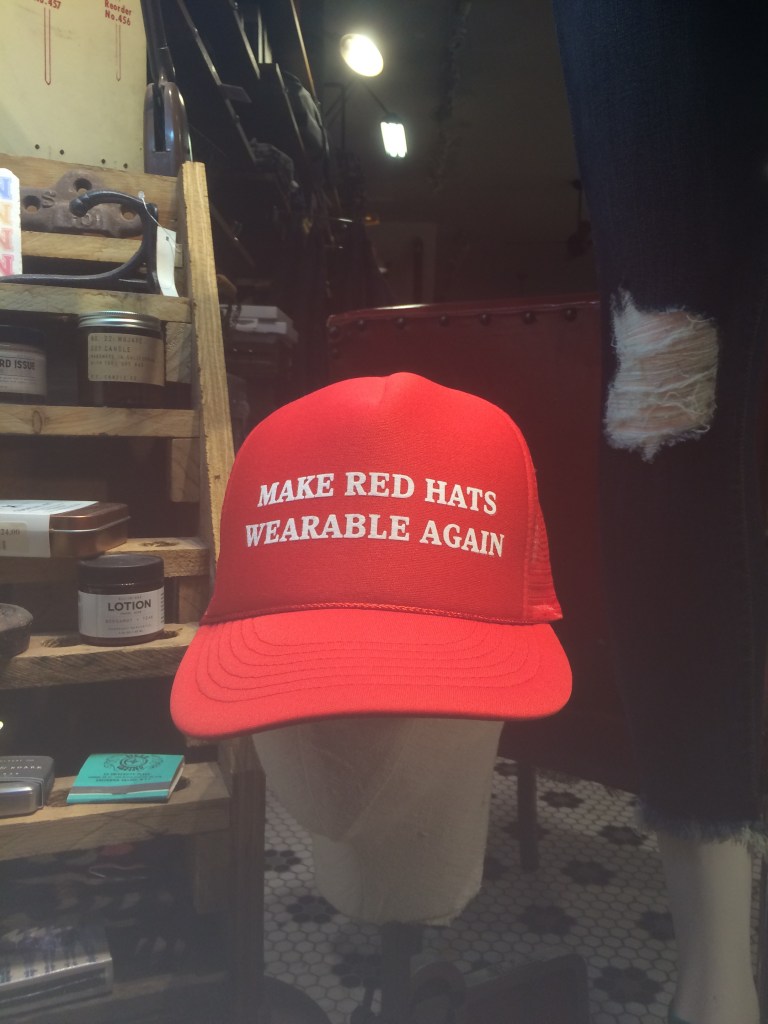
Brooklyn, NY, 2018
-
No One is Coming to Save You

No one is coming to save you.
It’s hard to hear, but eventually, you’ll thank me. Because it’s one of the most difficult life lessons to learn.
In this case, we can blame Hollywood.
Thousands and thousands of stories told over the years, and so many of them still use a plot device ripped from the Ancient Greeks: the Deus ex machina.
Most normies won’t know that term, but I’m aware that most of you aren’t normies.
So as not be a pretentious asshole, let me explain: Deus ex machina means the part of the story where someone, or something, shows up, improbably, just in the nick of time.
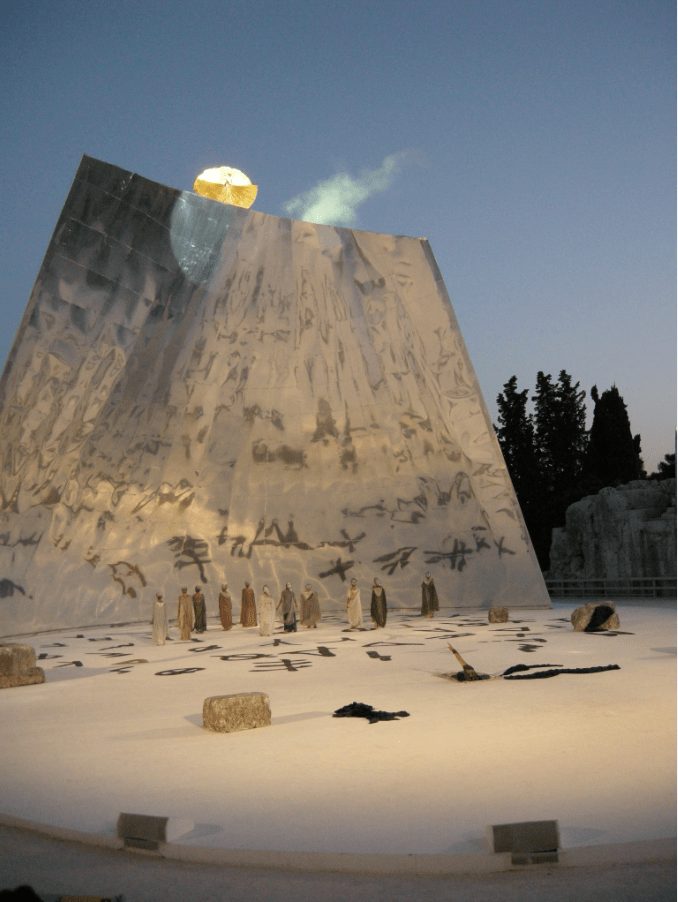
(The first image in a Google search for Deus ex machina, courtesy of Wikipedia) It happens so often that most people don’t even notice anymore. And one can’t fault the ancient storytellers for wanting to preserve tension for as long as humanly possible.
That desire, to keep the audiences rapt, required that salvation only happen at the Very. Last. Second.
By the gods. (Most of the time, anyway.)
And Hollywood has leaned on that time and again, to the point it became a part of American mythology.
A nation of individuals, but somehow, we always win in the end, and the good guy always wins, and he always has tons of friends, who have his back, and he is the best shot, and the best fighter, and the best lover.
Americans have been trained (especially by Trump) to believe that only winning matters. And they deserve to win, all the time, no matter how they behave.
That is what it all comes down to.
Do you win friends and influence people by being a good enough person that there are people who care enough about you to “have your back,” or do you use power, intimidation, and control to force people to be nice to you? (Otherwise known as kissing your ass.)
In fairness, this rant is not random.
I’ve been writing about friendship, mental health, and the attempted pursuit of happiness since I began Sunshine and Olly six weeks ago.
And this weekend, I read three things that blew my mind, for how tightly they tied together the philosophy I’ve been unpacking, (in real time,) here on the blog.
First, this brilliant, long-form piece in ESPN, about the absolute limits of good friendship.
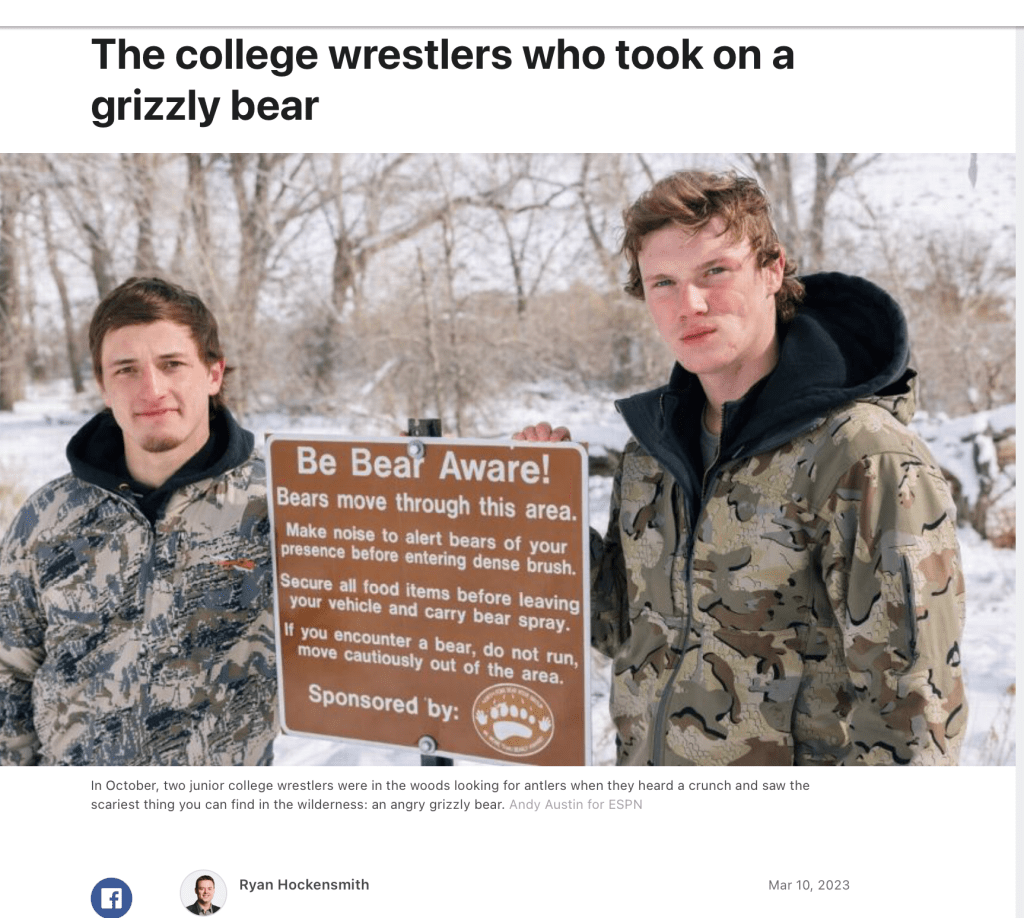
Courtesy of ESPN.com Two wrestlers, new but really great friends, were hunting for shed antlers in Wyoming. They stumbled into a Grizzly Bear’s home, and when she attacked one friend, the other had the chance to get away.
Instead, he charged the bear, trying to execute a takedown, because she was about to kill his buddy. As a result, the hero took the worst brunt of the attack, but they miraculously both survived.
This is the dream scenario, and it worked out.
An actual fucking Deus ex machina.
But these were two dudes who cared about each other, had spent (probably) more than 100 hours as wrestling training partners, and who believed in the values they were taught in sports.
On a deep level.
That is what most people want, but don’t know how to get.
As to the second article, (in the NYT,) it provided some science to something I’ve noticed anecdotally, and begun to write about.
Americans are literally anti-social right now, as many people’s brains aged 10 years during the pandemic.
People are scientifically different, and have lost skills on how to relate to each other, how to connect, and how to offer the kind of friendship they’d like to have in return.
(If you can’t give, you can’t receive.)
The last article is the bleakest.
Consider yourself warned.
It was another long-read, this time in the NYT, about a family-owned sandwich shop in Phoenix, which is located in a neighborhood taken over by a tent city.
The writing is terrific, the photos are great, and overall, the story manages to empathize a bit with the sub-makers, and the people living in hell outside the door.
In this case, it’s LITERAL HELL, as more than 1250 unhoused people have died on those burning, Phoenix streets in the last two years.
1250!
Many of them cooked to death on the concrete.
Elsewhere, it describes the way human civilization works, when only might makes right.
Protection rackets have developed organically in the tent city, and people are killing each other over patches of sidewalk.
They were left to die.
Alone.
In the worst of circumstances.
And nobody came to save them.
If you’ve read this far, I’ll do a nice pivot, and turn my tone around.
This is not (only) a bleak story.
Because once people realize they will have to save themselves, it opens a big door to things like growth mentality, personal empowerment, and the quest for better mental health.
What most people want is to be safe, feel good, to be appreciated for who they are, and to be seen.
If/when a person grows up in a family that undermines that, rather than supporting it, or if they work in the wrong company, or go to the wrong school, it can be functionally impossible to live at one’s optimum.
It’s why sports teams talk about culture all the time.
And why so much of mental health Twitter is always discussing the impact of other people’s negative energy.
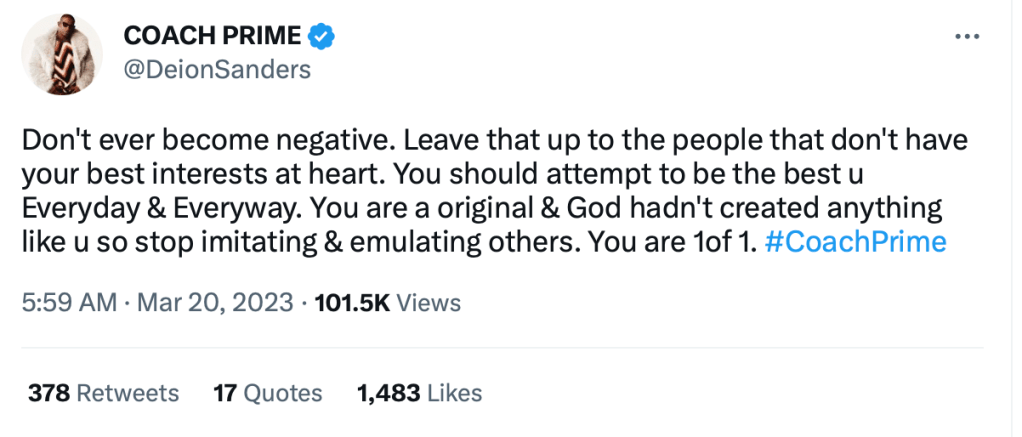
From Deion Sanders’ Twitter feed today If you can’t buffer it, or avoid it, you best expect it will affect you for the worse.
So that’s where we’ll land today.
If you love yourself, (and if you have a partner and/or children, love them properly,) you’ll figure out what is actually wrong in your life.
Who is dragging you down?
Who doesn’t see you in the positive way you (hopefully) see yourself?
What makes you happy?
Who makes you happy?

Sunshine and Olly make me happy! It’s a great way to start down the path to being the engine of your own happiness.
Hasta luego!
Olly says hello!
-
Dana Stirling: “Why am I Sad?” A Portfolio & Interview
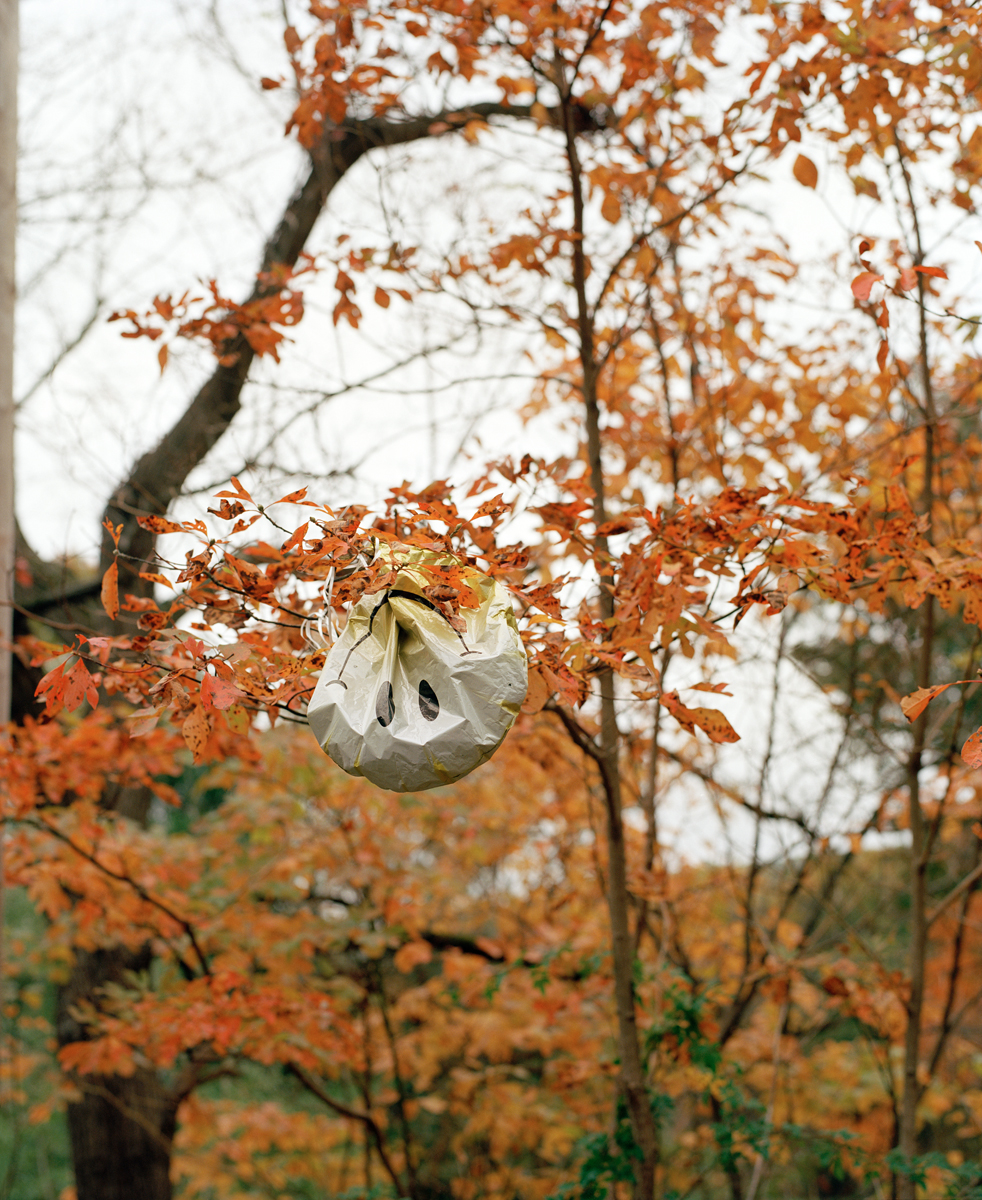
I met Dana Stirling, and her partner Yoav Friedländer, at a photo festival in Portland, back in 2019.
(The before-times.)
They’re both photographers, born in Israel, and together they also run Float Magazine.
Dana recently shared her project, “Why am I Sad?” with me.
Not only did I love it, but found the concept, (using art both to understand, and express our own mental state,) to be in line with what Sunshine and Olly has become.
I’m excited to kick off a new feature here on the blog, with an edit of Dana’s phenomenal work, as well as an interview we conducted via email. (This was not a pre-written Q&A; rather, we answered each other in real time.)

Backyard Water Slide, MA, 2015 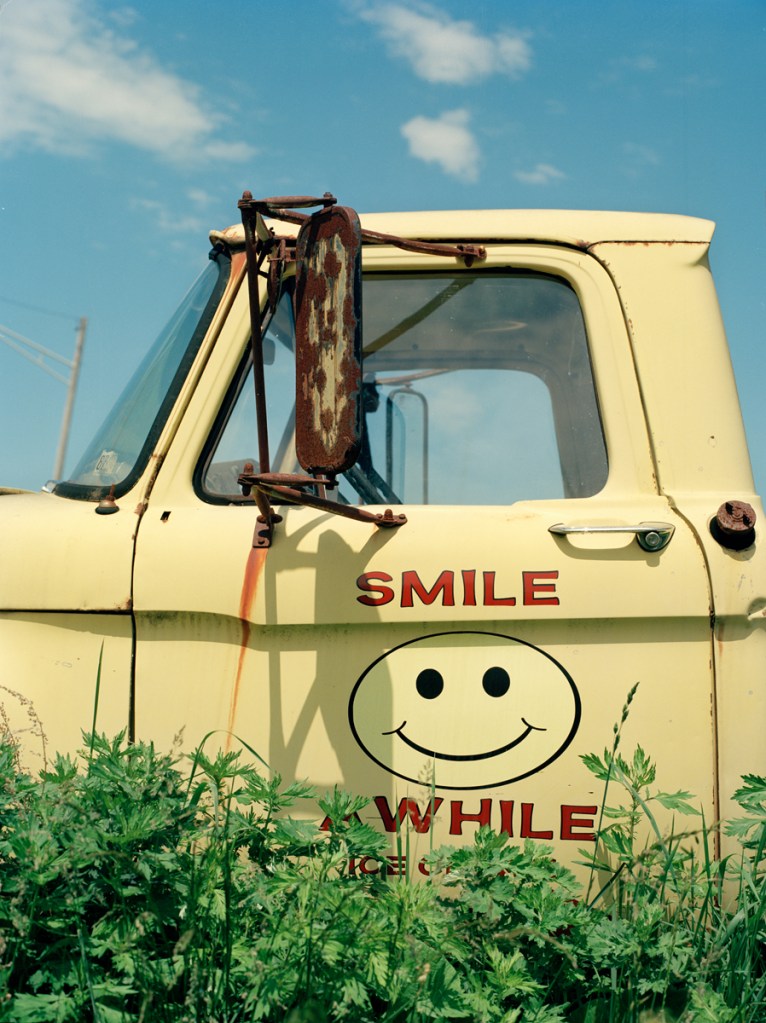
Smile A While Truck, Wyalusing, PA, 2022 Jonathan Blaustein: I know you’re from Israel, but not what brought you to the States.
What was behind your big move?
Dana Stirling: Originally my partner, Yoav, moved to New York in 2012 to study for his MFA at the School of Visual Arts. I was still in my undergrad program at the time, so we were long distance for a year. Once I finished my BA in 2013, I visited many times to be with him and decided to apply for an MFA program as well. I was rejected from almost all of them and ended up also doing my MFA at the School of Visual Arts which is when I moved as well.
JB: Gotcha. So it was for school. Makes sense.
If you’ve been in the US for a decade, (much less the last decade,) you haven’t necessarily seen us at our best.
Why did you stay?
DS: I think every place has its ups and downs, no? It is easy to see how much greener someone else’s grass is so I try not to judge anything or anyone too harshly.
I grew up with immigrant parents who came to Israel from London back in ’88 for many reasons, but including anti-semitism. I grew up speaking English, and my parents struggled with the local language (Hebrew,) but because I was born there I was basically a Tzabar (meaning a person who was born in Israel).
Even though I was native to this place, I always felt pretty disconnected. I was never really British enough but never really Israeli enough too in my mind – I just felt like I belonged nowhere.
There was never a strong connection to my physical space. I never felt a rooted connection to the land, and always felt like an immigrant, so moving to another country like the U.S was just natural to me – I belong nowhere so what does it matter where I am?

514 Mailbox, Ithaca, NY, 2021 
Dead Bird, Route 178, CA, 2021 JB: I didn’t know your family had immigrated to Israel from England.
I was curious, and your answer is powerful, but also lines up.
In particular, because the series we’re featuring here, “Why Am I Sad?” speaks powerfully to a sense of disconnection, or dislocation. And you write (eloquently) in your statement about your mother’s clinical depression, which can feel like a wall that exists in a relationship.
The images speak to a mental state, but also to using art in the hope of escaping that mental state.
What is it like for you to be open and vulnerable with others, through your creative process?
DS: Thank you for the kind response to my words – I always say that English is actually not my first language even though I’ve talked to my parents in English only all my life, but Hebrew has always been my first language, so writing in English can be a struggle sometimes.
I actually always felt a deep shame with my situation.
No one really knew about it growing up, besides maybe a couple of friends. I always talked about it in a very shallow way, which led to most of my personal relationships in my young life to be pretty superficial, because I never really wanted to talk about my home or my mother or more importantly – how I felt.
It took me a long time not only to talk about it in this way, but actually understand the impact it has on me, and how it shaped who I am and how I act and feel as an adult.
I have a fear of becoming sad and depressed to the point of not leaving the the house, like my mother, that is so rooted in me that every time I am home not doing something productive I hear these voices in my ear. But at the same time, I’ve always struggled with motivation, and being productive, because it was just always easier to hide, sleep, ignore and isolate rather then do anything active. So this is something I still struggle with.
Photography has really saved me, because it gave me purpose. I think if I hadn’t found it – I might have been completely lost.
Funny enough this project is really all about this struggle.
Photography is a way for me to communicate, because I do have a tendency to hide and bottle my emotions up – but it is also a source of frustration because when I don’t photograph, I feel anxious about not doing enough and feeling like I am failing which becomes an interesting cycle of emotions but it also what makes me photograph the way I do – complex I know.

Ghost Town, Bodfish, CA, 2021 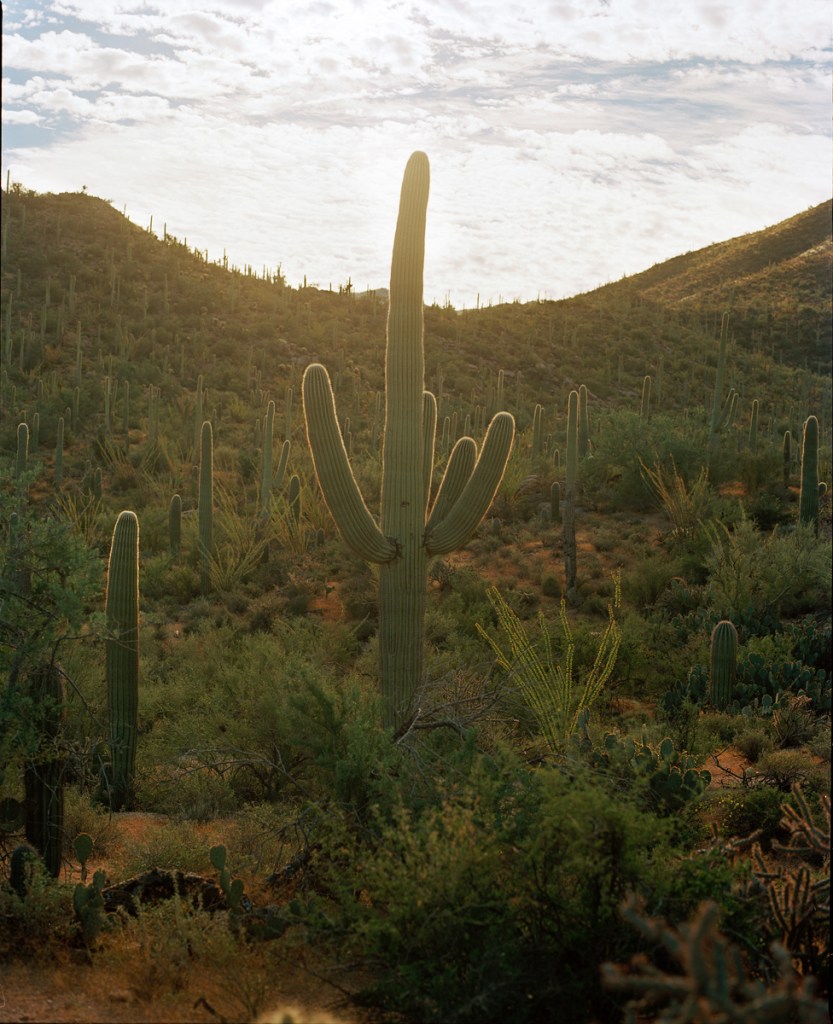
Glowing Saguaro, Saguaro National Park, AZ, 2022 JB: I can relate to pretty much everything you’ve written.
I think a lot of other people can too.
I respond to your writing, yes, and find it fascinating that you can’t/don’t communicate with your parents in your mother tongue.
Such a powerful metaphor.
The images (at least the ones you share,) do capture an intense emotional energy, which comes from your vision, but also the color and light palette. Though you share in your statement that you made object art in rooms for years, as a form of comfort, I actually love the pictures shot out in the world.
The super-bleak swimming pool in Winter is a great, and obvious one. But there were a lot of photos that include lush greenery, or flowers. As if you were seeking to find some solace, even as you were also attracted to sad things.
That said, I also found a bit of absurdist humor embedded in there too.
It’s known, from a feminist perspective, that men often tell women to smile more.
And your series features an image telling people to smile, as well as smiley-face-emoji graphics.
In a way, is that subtext here?
“Don’t tell me to smile, asshole! You don’t know me, or why I’m not smiling.”
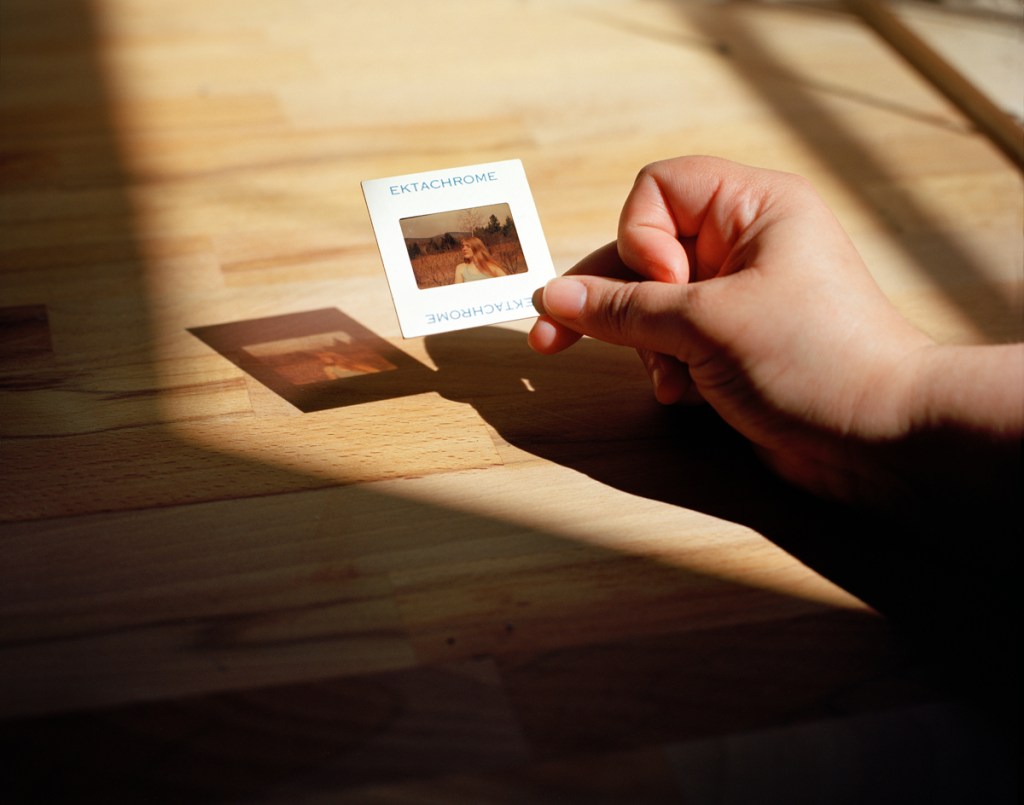
Holding a Girl, Queens, NY, 2020 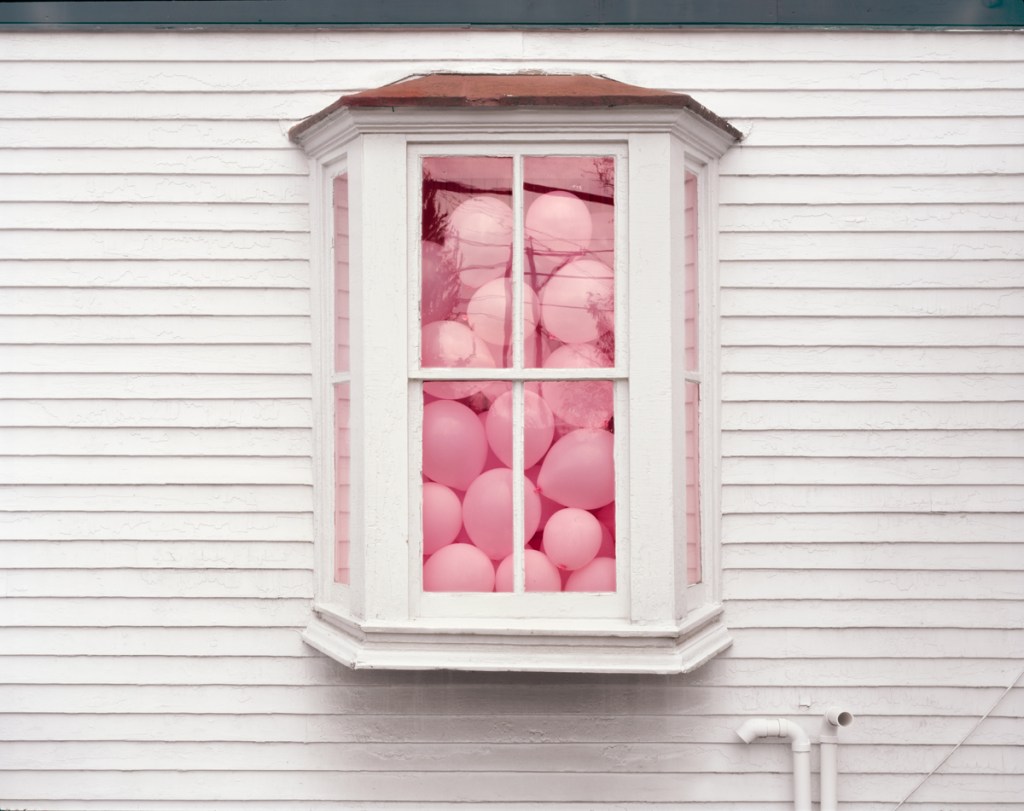
DS: I think in a way my work is sad mainly because – I am sad (sometimes). What I mean is that, I photograph thought that mindset.
I am actually a really picky photographer. I use a Mamyia RZ 67 film camera, and I won’t even take it out of the bag if I don’t see something that I think is interesting or makes sense. I can go an entire trip without even photographing a single image.
I can only photograph something that is perfect for what I am looking for, so my work process is pretty slow. When I do find these gems, they are unmistakably a perfect representation of who I am as a person and as an artist.
This is also why photography is such a source of worry for me as well, as I mention in my statement, because I am so picky I won’t photograph for a long period of time which makes me spiral.
I think my work has always been slightly sad, even when I document things that are “happy” like the smiley face because it is just a reflection of myself.
I do like the irony and the humor that comes out of these images as well. It is definitely intentional, and is indeed a part of the work.
I think life is complex, and emotions are not always black and white. I do struggle with depression but I also have a really good life – I love, I enjoy things, I am also happy in addition to having this heavier burden.
This work, I think, reflects all of this. I think there is beauty in sadness and I personally always found my images to be beautiful regardless of what is photographed in it – even if it is something that is decaying, dying or discarded.
I’ve had many people in the past tell me that my work is too sad and it will never sell and that people will not be interested in it – it stopped me for a while and it really made me question my images, but eventually I realized that my work will always be this way because this is who I am and I can only photograph through the lens of the person I am.
I hope people who see the images smile, but I also hope they will come to understand that it is okay not to smile if they don’t want to, and not be okay all the time and that other people struggle just like them and that is okay too.
JB: OK. Fair enough.
A diplomatic, but honest answer. (You’ll get no ball-busting from me on the subject.)
You’ve been really generous to share your work with our audience, as well as taking the time to answer my questions.
I’ve got just one more, if you don’t mind.
Have you got anything cool coming up, in the near future, that you’d like to be able to share with us? Either in your photographic practice, with Float Magazine, or maybe something Yoav is working on?
Thank you so much for everything!

Pride of Madeira, Shoreline Highway, CA, 2019 
Upside Down Smile, Ringtown, PA, 2021 DS: It’s been a pleasure and thank you for your genuine interest in the work.
I truly do appreciate it!
I am working towards getting this project into a book, but I can’t really say more than that for now. Hopefully things will work out soon, and we can see this work on the pages of a printed book, which has always been my dream.
With Float I am always looking to make more opportunities for artists to showcase their work in the best way possible with, as little to no cost, which is always a challenge but it is a huge passion of mine.
Because I am an artist myself, I’ve seen the increase in prices for calls for entry, and it is honestly getting unattainable to submit your work to many people. It’s getting closer every day to a system of “pay to play,” in order to get yourself out there.
Now I do understand platforms need money, and I am not necessarily against a submission fee, but the prices are getting to be so high that many artists don’t feel they can justify spending these prices only to get rejected.
I want to make opportunities that are accessible, as much as possible, if I can.
-
Waiting for the Sunshine?

Hello there.
How’s it going?
Is Spring almost upon you, as I opined in Monday’s post?
It’s coming here, rapidly, but in all honesty, that’s not a good thing.
April is typically one of the two grayest, windiest months of the year. (Which goes great with taxes, and community ditch-cleaning.)
Normally, it’s something to bitch about, but then quickly get past, as other than April and November, here in Taos, we get plenty of sunshine and blue skies.
Famously, Taos Ski Valley used to advertise 330 days of sun a year as a part of the marketing materials.

NM blue sky, November 2, 2020. However, there’s this pesky phenomenon out there called Climate Change.
And it happens to be… you know… changing the climate?
I fucking hate it.
Back when we lived in New York, (which was admittedly a long time ago,) I used to sing a song to Jessie.
It was all about despair, and hope, in the midst of the long-ass winters.
It went something like this…
“Waitin’ for the sunshine. Waitin’ for the sunshine. Tired of the gray days. Tired of the gray days. Oh, but it ain’t comin’, it ain’t comin’ soon. No, it ain’t comin’, it ain’t comin’, soon.”
I gave it a bluesy, country twang, and to be honest, I was not a very good singer.
(Slightly better now, but not by much.)
Lately, Jessie and I have been discussing how hard it is to feel good, after the sun has been gone since November.
No lie, I can remember about 3 truly gorgeous days, in nearly 5 months.
It is gray for weeks on end now.
Thanks a lot, Climate Change. You fucking asshole!
Now I’m wondering if this is the new normal?
I admit, a lot of people have it worse.
There are floods, tornadoes, hurricanes, mud slides.
It’s bad out there, in a lot of places.
Hell, the NYT just did a story about climate change refugees moving to Duluth, MN, seemingly oblivious to the lack of sun and extreme cold. (Shout out to Jenn Ackermann for the great photos.)
One sucker admitted to moving there, to escape Colorado wildfire smoke, only to discover a fresh batch in MN, which had wafted down from Canada.
Fire smoke in the Taos air, (before fire season,) May 1, 2022 As I’ve previously written here, everything is connected.
Ecosystems.
The Universe.
Humanity.If we accept that obvious reality, it makes everything easier.
Because it’s definitely harder to be as anti-social as Americans have been, the past few years, if you accept we’re all in this together.
(Except for Elon Musk. He can fuck off to Mars.)
-
Time for an Adventure?
Hi Everybody!
How’s it going?
For the first time since I began the blog, I’m not sure exactly whom I’m addressing.
Since my birthday, (49 on March 4,) I haven’t looked at the blog stats.

Took this a minute ago. 49, and back at my high school weight. I haven’t looked once, after obsessively checking for the first month of Sunshine and Olly’s existence.
Why would I do such a thing?
Because I realized the beginning stage was proof of concept.
If I write regularly, and share it for free on a blog, will people turn up to read?
We’ve established the answer is yes.
An audience cohered, and I’m hoping over time we can figure out how to engage as a community more. There’s the comment section, obviously, and some of you chime in from time to time on FB, Twitter or IG.
That’s cool.
But I stopped checking where you’re coming from, and which articles you like best, because from the jump, I wanted this blog to be about what feels right.
(It’s art, not science.)
Targeting articles to a demographic, based upon market research, is about as anti-art as it gets.
Eventually, I’ll reengage with the analytics. But this felt like a precarious time, where creativity and business can become adversaries.
Since there is no business in a free blog, (beyond branding,) I figured we’d keep it pure for a while longer.
Offering advice, or sharing how I’m learning through life experience, has been a fun evolution here.
As I did something new and different on Saturday, to deal with the traumatic energy I acknowledged last week, let’s use it to spread some positive vibes.
Shall we?
In my lifetime, I’ve gotten stuck in ruts.
We all have.
It’s what actions we take to break unhealthy patterns that interest me.
If what you were doing, over and over, isn’t working, you have to shake up your process.
In my case, Taos is really far from everything. Seriously, the nearest big town, from my home, is over an hour away.
(Española.)
Santa Fe is an hour and 45 minutes by car, and ABQ is 2.5 hours away. (Without traffic.)
Not to mention, with a bunch of coked-up crazy drivers out there, going 95 mph on I-25, it’s dangerous as fuck on the roads in 2023.
(Not exactly enticing, when you’re stressed out, and need to get in the car and go.)
To the SouthEast, Las Vegas is also an hour and 45 minutes, except you have to go up and over the Rockies, in a ridiculous pass, so that is not the best way to exit either.
To the West is nothing.
Farmington is 3.5 hours away, (if you’re lucky,) and then it’s probably another 8 to Las Vegas.
(The American West is much bigger than you think, if you’ve never been.)
All told, with that much distance between us and anywhere else, you don’t leave town often.
Which leads to deep ruts.
On Saturday, needing desperately to shake things up, I realized I hadn’t been West of Tres Piedras in more than a decade.
I couldn’t remember anything, other than taking Theo to a fishing contest at Hopewell Lake, with his grandfather, when he was 4 or 5.
(The kid is now 15, and 5’11”.)
So that’s a decade.
Highway 64 goes up and over the Rockies, in the Brazos mountains, and is among the prettiest out there.
Going from nowhere to nowhere, it’s also empty.
I’ve got a really good car at the moment, (for the first time in ages,) so even though I saw clouds over the mountains, and had read that storms were approaching, I said,
“Fuck it! Let’s roll!”
After a “fake” winter of dry, dead, brown grass, slowly, I drove into “actual” winter.
First, it was warm-ish, and then ten minutes later, the rain started.
Up, and up I drove.
The temperature dropped.
I noticed a pickup truck, pulled over by the side of the road.
Up and up I drove.
Winter was here!
Huge pastures covered with snow, and endless trees to the horizon.
It was so fucking beautiful.
Winter, and only for me. No one else around.
Then, the temperature dropped again, down to 32 F.
The rain turned to snow, and the snow began sticking to the road. But still, up I drove. My car has AWD, and is high tech, so I wasn’t worried.
Until I felt the snow starting to hit the undercarriage. It was accruing on the road quickly, and I didn’t have much traction.
I started to get a bit scared.
No one knew where I was.
The cell service was spotty at best.
I looked for a place to turn around, but there was none. Just rapidly piling snow on the side of the highway, with no way to break into it.
Up, and up I drove, but now I had some anxiety in my stomach.
It had officially become an adventure.
Finally, lacking options, I said a quick prayer-thought, and slowed the car.
I had to do a full K-turn on a snowy mountain road, just hoping no truck would slide into me from above as I executed.
Or that I’d get stuck horizontally, and then T-boned by the next car that came down the mountain.
It was a dodgy moment, but nothing bad happened.
The car performed, I performed, and headed down the mountain, knowing I’d drive out of the storm soon enough.
And I did.
That’s when I remembered a hiking trail Jessie and I used once. Maybe 16 years ago? I recall the day we did it, but not the year.
It was forever ago.
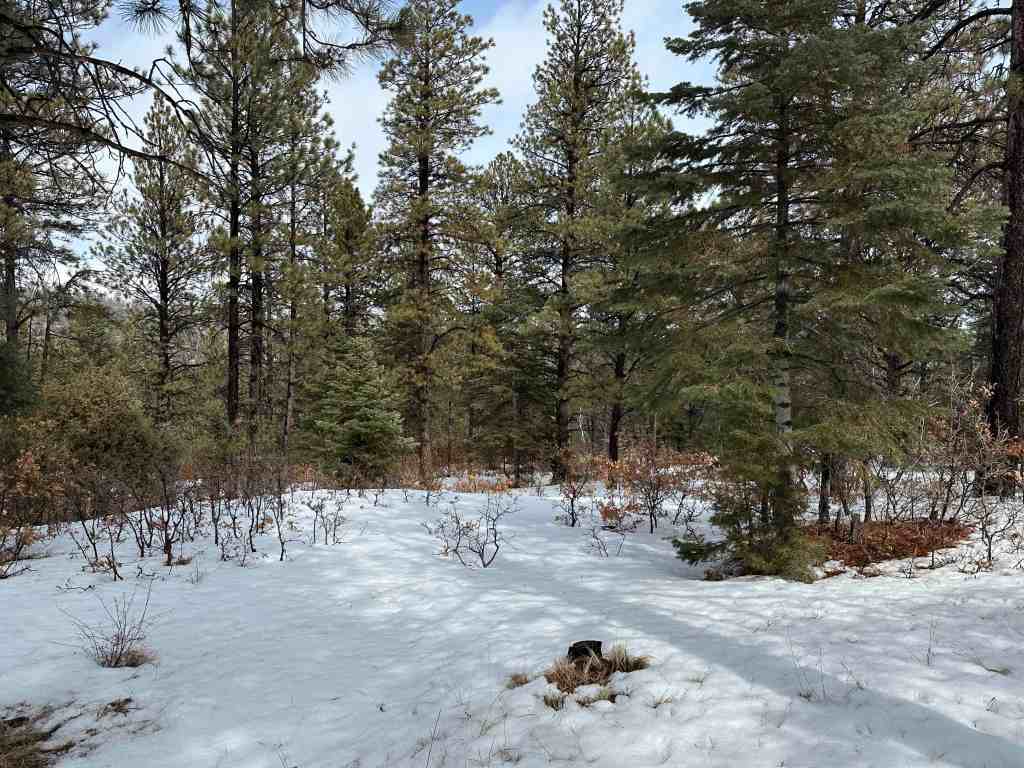
I pulled the car over in that spot, and walked through hip-deep snow for a few minutes.
Until I found the perfect clear spot, under a Ponderosa Pine tree. (The wind had made the snow distribution uneven.)
It was so quiet.
I was so alone.
Just me, the trees, and the snow.
I noticed one tree, as I leaned on it, had a wet side, and a dry side.

The same tree.
But a completely different experience.
Just like me.
An hour before, I’d been stressed out of my mind, stuck in our little valley, obsessing about my (very real) problems.
But if you think I felt anything other than majestic, as I stood under that tree, looking out at the endless, empty American West, you haven’t had an adventure in too long.
Time to get out there and see something new!
(Or make something old new again.)
Either way, hope that’s helpful.
-
Photo Book Review: Fallen Trees

Everything dies, baby, that’s a fact.
Springsteen said that, in “Atlantic City.”
(This wouldn’t be a Jersey-Boy-blog if I didn’t invoke Bruce’s name at least once a month.)
It’s true, though.
Planets die.
Stars die.
People die.Hell, birds dropped from the sky, dead, over Labor Day Weekend, 2020.

September 2020 (Worst. Year. Ever.)
It’s the cycle of life, and as has been said before, (by others,) Homo Sapiens are the lonely creatures aware of our finite existence.
Tough sledding, sometimes.
The ego gets in the way. We each believe we’re so important, because that’s baked into our brains. Having children bumps many people from the center of the Universe, but parenting isn’t for everyone.
Probably religion serves this purpose for many: making meaning out of our time here, and peace with ultimate demise.
Art can help us process our feelings towards death too.
I have a heaviness in my life right now.
Something I can’t share.
But you can trust I take the advice I dispense. Self-care has been prominent, and I’m even going to BJJ tonight, though I’m still not 100%.
We can’t slack, when it comes to mental health, especially when we have children who rely on us.
So today, not only did I plan to write, but I went to my famous book stack, to see if a slight volume might remove my mind from my troubles.
As always, the photo-book-gods provided, as I quickly found “Fallen Trees,” a ‘zine from 2022, sent in by Kevin O’Connell. He’s an artist I’d met once or twice before, and when he came through Taos last year, we met for a coffee.
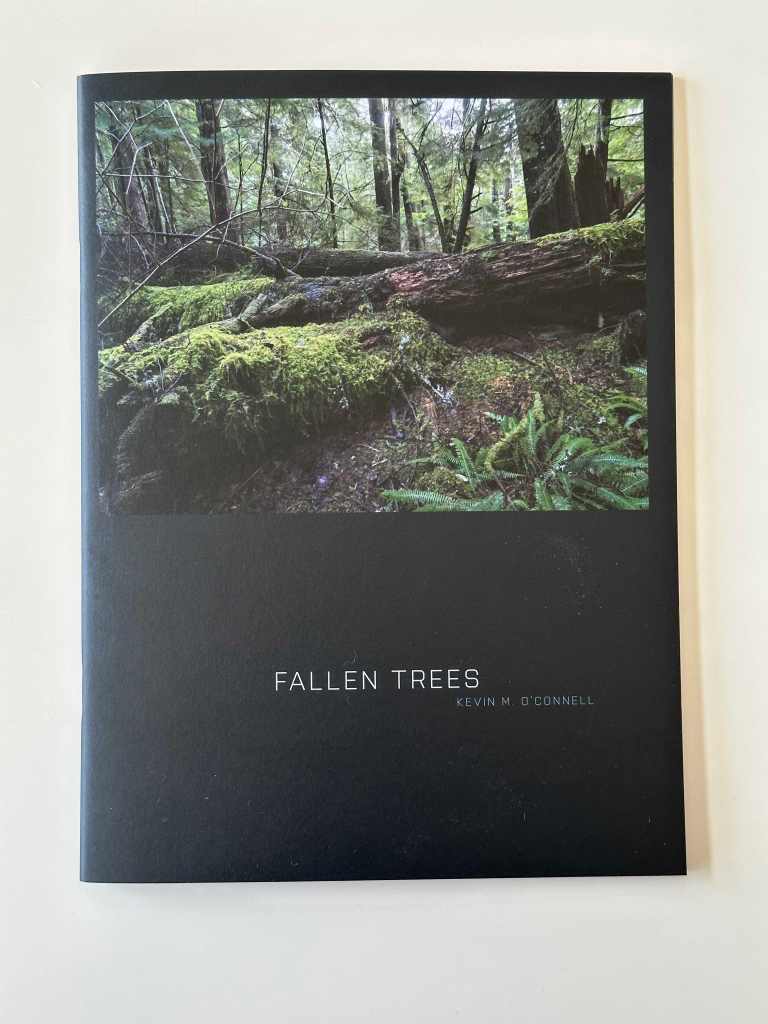
Great dude.
Not a great book, but it’s perfect for today.
(And it’s a plenty fine, very nice book. Just not brilliant.)
The opening essay is terrific.
Clean, poetic, intelligent writing, setting the scene as dense, lush forests in the Pac Northwest.

(Oregon, if we’re being specific.)
Kevin writes of “the musk of decay,” so I assumed the book would make me cling to my melancholy.
As if!

Rather, what grabbed me was not the decaying, fallen trees, but the insanely lush, verdant, REALLY FUCKING GREEN surroundings.
I’ve previously shared it’s been a long, 4 month winter here in Taos.
News just dropped, TODAY, the 3 year La Niña has finally lifted. It was responsible for this year’s, cold, gray, brown mess.
Few blue skies. No snow remaining on the ground. Just lots of dead brown grass.
Depressing AF.
So looking at Kevin’s book, for a couple of minutes, reminded me that green exists.
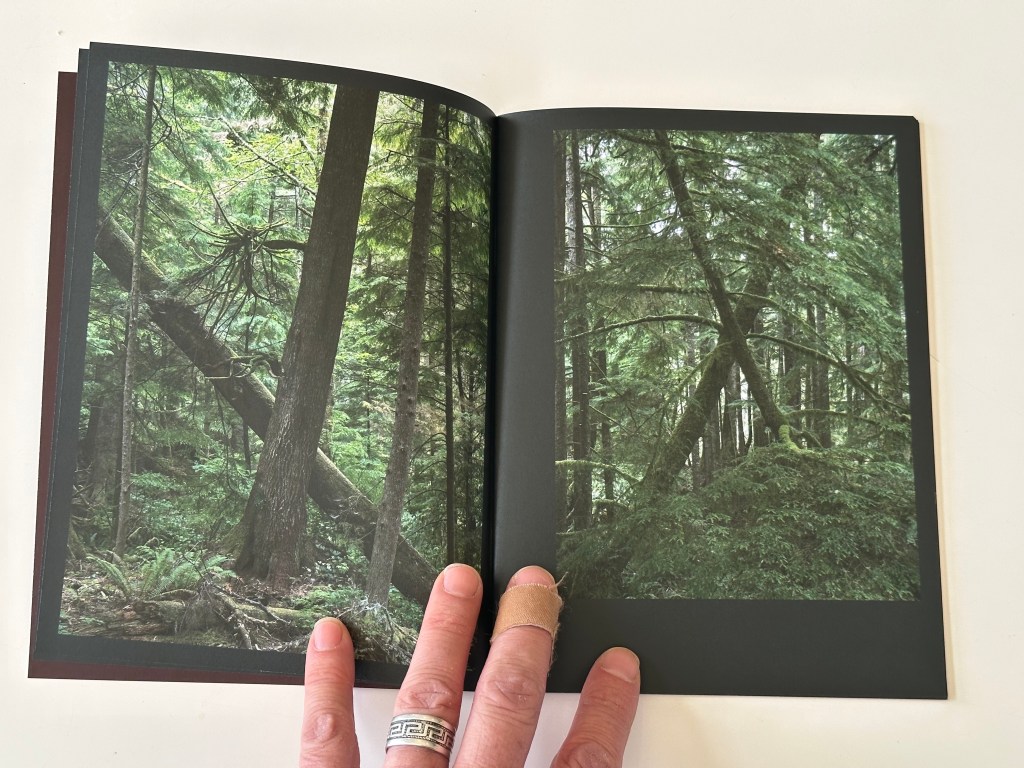
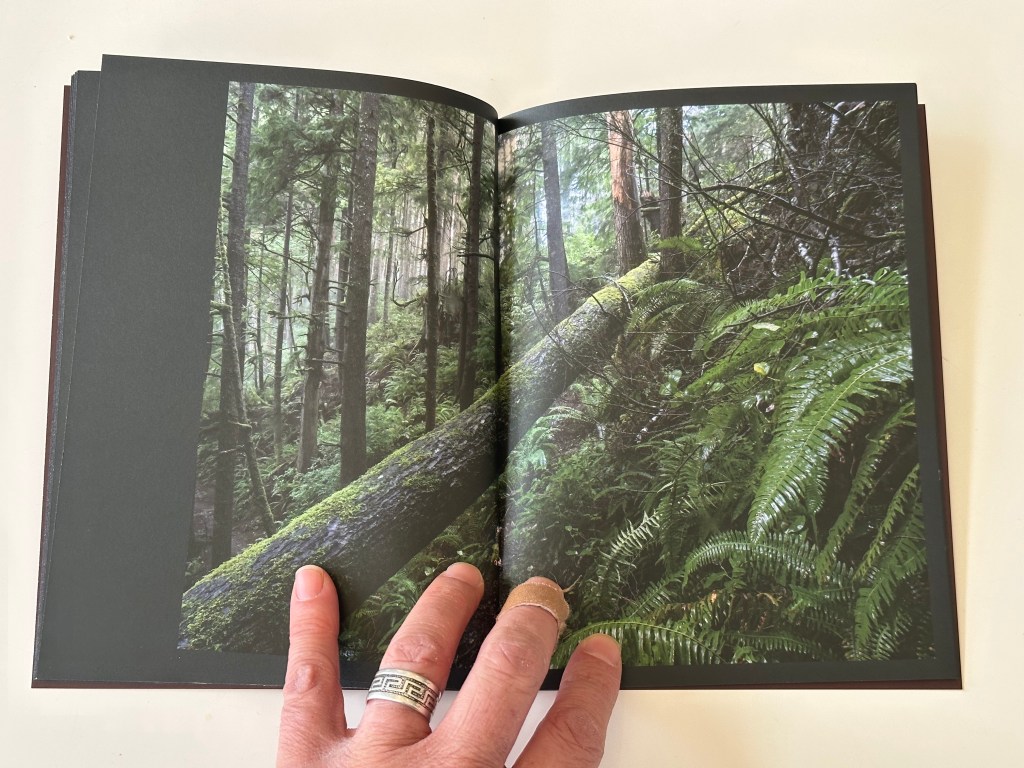
Fresh, new, healthy, growing things exist in the world.
It’s easy to forget, when you’ve been cold for 1/3 of a year.
But Spring is coming.
-
Subscribe
Subscribed
Already have a WordPress.com account? Log in now.
 Sunshine and Olly